
Last Updated: November 1, 2026
Quick Summary
To make hair gel last all day, apply it to damp, clean hair in small sections, then leave the cast alone until it dries fully. Use a dime-sized amount for short hair and a quarter-sized amount for medium hair, and stop touching your hair once it is set.
- Gel breaks down on dirty hair, from too much product, or from touching hair through the day.
- Damp hair is roughly 70 to 80 percent dry and should feel cool and slightly heavy, not drip.
- Choose a strong hold gel with a firm-setting polymer and no drying alcohol.
- Layer leave-in first, then mousse, sea salt spray before gel, and gel last.
- Wash gel out before bed; leaving it in overnight can dry the scalp and cause buildup.
Table of Contents
- Why Hair Gel Loses Its Hold by Midday
- The Best Way to Apply Hair Gel for All-Day Hold
- Hair Gel on Wet or Dry Hair: Which Gives Longer Wear?
- Choosing a Strong Hold Hair Gel That Survives Humidity
- Layering Gel With Leave-In, Mousse, and Sea Salt Spray
- How Long Can You Leave Hair Gel in Your Hair?
- Troubleshooting Flaking, Crunch, and Styling Failures
- Build Your All-Day Styling Kit
- Frequently Asked Questions
Why Hair Gel Loses Its Hold by Midday
Most gel failures start long before your hair dries. According to the American Academy of Dermatology's guidance on hair care, how you prep and apply product matters as much as the formula itself. Gel tends to break down when it's applied to dirty hair, overworked during styling, or layered too heavily.
Three things kill hold:
- Sebum and residue coat the strand and stop gel from bonding
- Too much product creates a soft film that collapses under humidity
- Touching hair through the day breaks the cast that holds the shape
Fix those three and most gels will carry you to evening. Skip them and even a hard-hold formula will sag by lunch.
The Best Way to Apply Hair Gel for All-Day Hold
The best way to apply hair gel is to work it into damp, clean hair in small sections, then leave the cast alone until it dries fully. That single sequence does more for wear time than any product swap.
Step 1: Start With Clean, Prepped Hair
Wash with a gentle shampoo and skip heavy conditioner on days you want maximum hold. Towel-dry to damp, not dripping. Hair that's too wet can dilute the gel, and hair that's bone dry may not absorb it evenly.
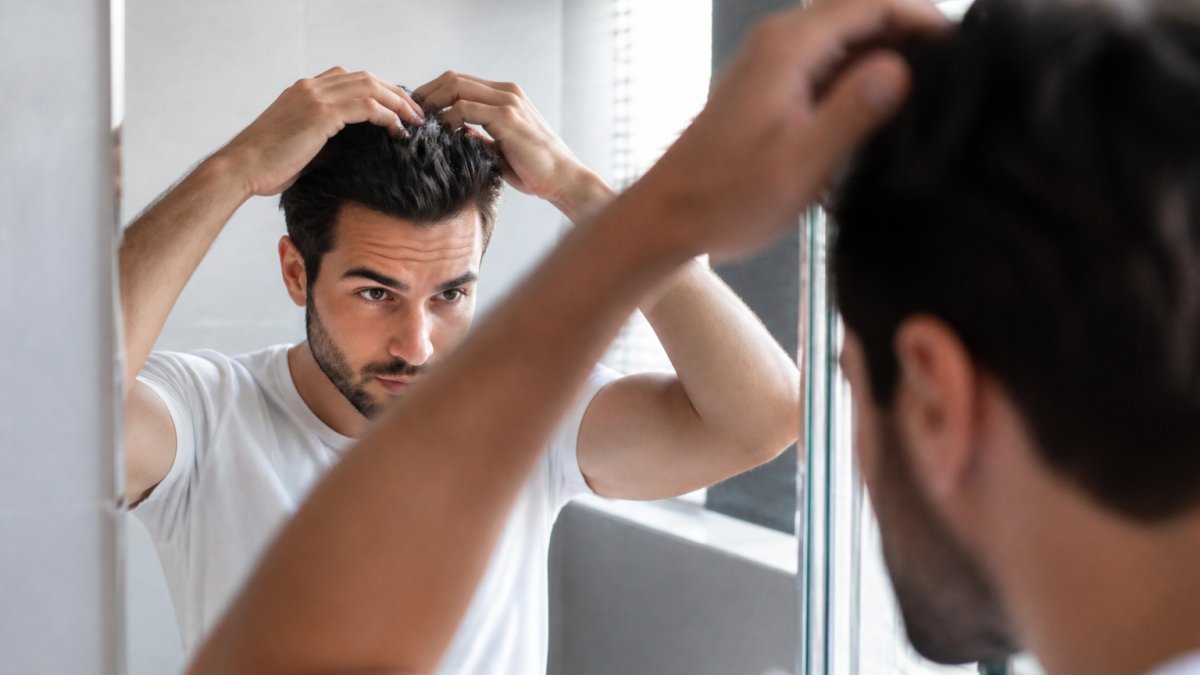
Step-by-step diagram showing how to distribute styling gel from roots to ends for a long-lasting hold
Step 2: Measure, Distribute, and Set
Use a dime-sized amount for short hair, a quarter-sized for medium. Rub it between your palms first. Then:
- Start at the roots and push back
- Work through the mid-lengths and ends
- Comb into shape once, then stop
- Let it dry without touching
That last step matters most. Every touch breaks the film.
Hair Gel on Wet or Dry Hair: Which Gives Longer Wear?
Hair gel on wet or dry hair gives very different results, and the difference is mechanical, not cosmetic. Gel forms its hold by drying into a polymer film around each strand. Water is the carrier that lets that film spread evenly and lock into a continuous cast. Apply to hair that is too wet and the film gets diluted and dries soft; apply to bone-dry hair and the gel sits on the surface, grabs unevenly, and flakes when you comb it.
The sweet spot is damp hair, roughly 70 to 80 percent dry. It should feel cool and slightly heavy but not drip when you squeeze it. That level of moisture lets the gel glide from roots to ends, set into a firm cast, and hold through humidity and movement.
Here is how the choice plays out by situation:
- Slicked-back styles and tight ponytails: apply to damp hair. You need a continuous cast to keep the shape flat and smooth, and damp application is the only way to get an even film root to tip.
- Curly and coily hair: apply to damp hair in sections, then scrunch. Water helps the gel clump curls and define them; dry application leaves frizz halos and white residue in the bends.
- Fine hair: apply to damp hair but use less, a dime-sized amount is plenty. Fine hair saturates fast, and too much gel on damp fine hair dries crunchy and limp at the roots.
- Thick or high-porosity hair: damp application still wins, but you may need to re-wet sections as you go. High-porosity hair drinks up water and product, so the first pass can dry before the gel sets.
- Touch-ups and flyaways: dry application is fine here. A tiny amount smoothed over the surface tames frizz without re-wetting the whole style.
One practical rule: if you are unsure, err on the damp side. You can always add a little more gel, but you cannot easily un-dilute an over-wet application. Water-based gels need that moisture to activate, so a dry application can waste product.
Choosing a Strong Hold Hair Gel That Survives Humidity
A strong hold hair gel needs two things: a firm-setting polymer and no drying alcohol. Alcohol makes gel feel light on application, then leaves hair brittle and prone to frizz once humidity hits.
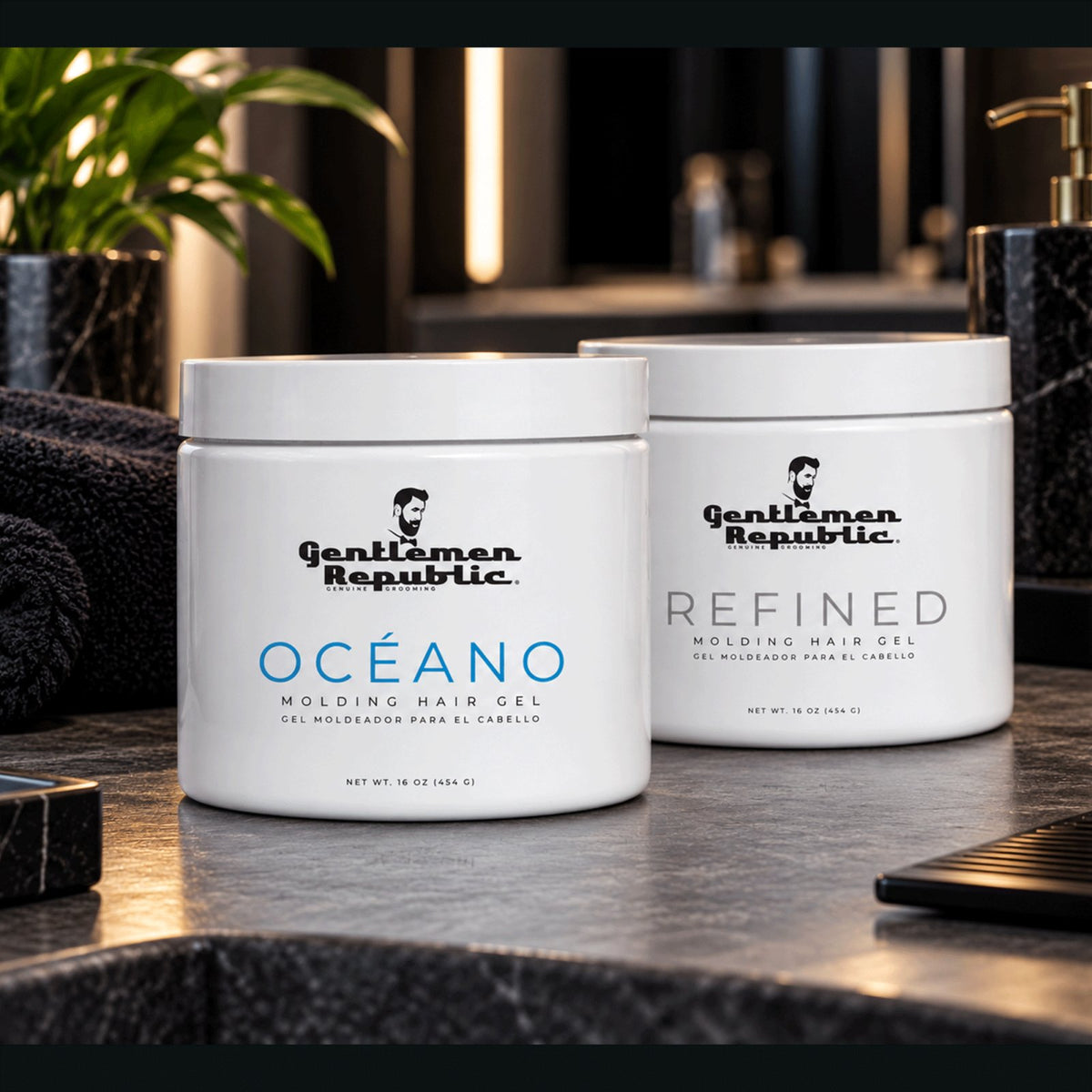
Our Refined Hair Gel is built for this. It offers a hard hold and high shine, and it is alcohol-free, with no beeswax and no petroleum. The Oceano Hair Gel offers a similar hold with an ocean-inspired scent if you want a lighter fragrance profile.


Watch out: heavy gels applied to already-oily hair will slide, no matter how strong the formula.
Layering Gel With Leave-In, Mousse, and Sea Salt Spray
Layering is where all-day hold gets interesting. The order matters more than the products.
- Leave-in conditioner first, on damp hair, for moisture and frizz control
- Mousse next, for volume at the roots
- Sea salt spray for texture, applied before gel
- Gel last, to lock the shape in place
Our Texture & Control Duo pairs Refined Hair Gel with Sea Salt Spray for texture plus hold. Apply sea salt spray to damp hair, let it settle for a minute, then layer gel on top. Don't overdo the spray, or the gel won't grip.

The Texture & Control Duo
How Long Can You Leave Hair Gel in Your Hair?
How long can you leave hair gel in your hair? A single day is fine for most people. Wash it out before bed. Leaving gel in overnight can dry the scalp and cause buildup that makes the next day's style harder to control.
If you style daily, plan to wash every day or every other day. Product buildup is the most common cause of flaking and dullness. A clarifying wash once a week helps reset the scalp. For anyone dealing with excess oil between washes, see our guide on how to stop styling products from getting oily.
Troubleshooting Flaking, Crunch, and Styling Failures
Most styling failures have a specific cause, and the fix is usually the opposite of what people try first. Work through the symptom, not the product.
Flaking (white specks on hair or shoulders). Flaking almost always means the gel bonded to residue instead of to clean hair, or you used too much. The fix: wash with a gentle shampoo, skip heavy conditioner on styling days, and cut your gel amount by about a third.
Crunch (stiff, hard cast that won't move). Crunch is over-application or a formula too stiff for your hair type. Fine hair crunches easily with a hard-hold gel. The fix: use less product, or once the gel is fully dry, scrunch the cast out gently with dry palms.
Frizz in humidity. Frizz means moisture is getting into the hair shaft and swelling it. The fix: apply leave-in before gel to seal the cuticle, use a gel with no drying alcohol, and stop touching your hair once it is set. Touching breaks the film and lets humidity in.
Collapse by noon (limp roots, style sags). This is almost always dirty hair or too much product. Sebum and residue stop the gel from bonding, and a heavy layer creates a soft film that gives way under its own weight. The fix: clean hair, less gel, and apply at the roots first where structure is needed.
White residue that won't work in. The gel was not fully distributed, or it is fighting your leave-in. The fix: rub gel between palms until it is uniform, work it in section by section, and give it a minute before judging the result.
The refresh rule. When hold fades, do not add more gel. Stacking product is the fastest way to flakes and buildup. Instead, mist the area with water, reshape with your fingers or a comb, and let it dry. A small amount of water reactivates the existing film better than a second layer of product.
A useful habit: change one variable at a time. If you switch gel, amount, and leave-in all at once, you will not know which fix worked. Adjust one thing, wear it a full day, then judge.
Most styling failures have a specific cause, and the fix is usually the opposite of what people try first.
Problem |
Cause |
Fix |
|---|---|---|
Flaking |
Gel bonded to residue or too much product |
Wash gently, skip heavy conditioner, cut gel by a third |
Crunch |
Over-application or formula too stiff |
Use less product or scrunch out cast with dry palms |
Frizz in humidity |
Moisture entering and swelling the hair shaft |
Apply leave-in before gel, use alcohol-free gel, stop touching |
Collapse by noon |
Dirty hair or too much product |
Clean hair, less gel, apply at roots first |
White residue |
Gel not fully distributed or fighting leave-in |
Rub gel between palms, work in section by section |
Faded hold |
Stacking more product |
Mist with water, reshape, let dry |
Build Your All-Day Styling Kit
A reliable kit is smaller than most people think. You need a gentle shampoo, a leave-in or light conditioner, a strong hold gel, and a sea salt spray if you want texture. That's it.
For a broader walkthrough of cuts, products, and routines, see our men's hair styling guide. Start simple, then add products as you learn what your hair actually needs.
The real test of any routine is a full day: morning styling, a commute, a workout, and evening. If your style holds through all four, the kit works. If it doesn't, adjust one variable at a time.
Frequently Asked Questions
How much hair gel should you use for all-day hold?
Start with a dime-sized amount for short hair and a nickel-sized amount for medium or thick hair. Work it through damp hair from roots to ends, then add a small touch-up amount only where you need extra control. Using too much is the most common cause of flaking and crunch, so build up gradually rather than starting with a heavy scoop.
Can you use hair gel every day?
Yes, you can use hair gel daily as long as you wash it out each night. Leaving product on the scalp for days can cause buildup that weighs hair down and irritates the scalp. An alcohol-free formula like Gentlemen Republic Refined Hair Gel is one option for daily styling, and washing regularly helps keep hair and scalp clean between styling sessions.
How do you refresh a hairstyle without adding more gel?
Lightly mist the hair with water or a mix of water and a drop of leave-in conditioner, then reshape with your fingers or a comb. This reactivates the gel already in your hair without adding weight. If one section has lost definition, apply a tiny amount of strong hold hair gel to your fingertips and spot-treat just that area.
Why does my hair gel flake or turn white during the day?
Flaking usually comes from too much product, applying gel to hair that already has buildup, or layering gel over a heavy cream that does not mix well with it. Clarify your hair regularly, apply gel to clean damp hair, and choose a no-flake formula. Gentlemen Republic Refined Hair Gel is alcohol-free.
Most gel failures trace back to prep and application, not the product itself. Gentlemen Republic builds hard-hold, alcohol-free gels with clean ingredients and no flakes, made for real barbershop conditions. Start with clean hair, apply to damp strands, and let the cast set. Get started with Gentlemen Republic and build a routine that holds from morning to night.


Share:
How to Start a Barbershop Retail Line: A Step-by-Step Guide
7 Reasons Your Hair Feels Sticky After Styling Cream