
Table of Contents
- Why Your Styling Products Turn Oily by Midday
- How to Apply Hair Product Without Making Hair Greasy
- Why Water-Based Hair Styling Products Beat Oil-Based Formulas
- How to Remove Hair Product Buildup
- Fixing Greasy Residue on the Forehead and Hairline
- Choosing the Right Formula for Your Hair and Finish
- Conclusion
- Frequently Asked Questions
Last Updated: October 21, 2026
Why Your Styling Products Turn Oily by Midday
Most greasy-hair problems start with the product, not your scalp. If you want to know how to stop hair styling products from getting oily, start here: the product you apply in the morning can break down, mix with natural oil, and turn shiny by lunch.
The core issue: oil and water do not mix. Many products sit on top of the hair instead of absorbing, so heat, sweat, and sebum turn them greasy.
Product Residue vs. Natural Scalp Oil
Most people cannot tell leftover product from their own scalp oil. Product residue is the film a wax, gel, or pomade leaves behind after the water or solvent evaporates.
Sebum is the oil your scalp makes on its own. It shows up at the hairline and crown first.
A quick test: skip styling products for one day and wash as usual. If the grease still shows up fast, your scalp is producing excess oil.
How Formula and Finish Drive Grease
Formula matters more than most men realize. Heavy oils, waxes, and petroleum-based products sit on the surface and trap sebum underneath, and shine-heavy finishes reflect light, making any oil look worse.
Water-based formulas spread thinner, absorb faster, and rinse out clean. A matte finish hides oil better than a high-shine finish because it does not bounce light off the scalp.
How to Apply Hair Product Without Making Hair Greasy
The right amount and placement solve most grease problems before they start. Most men use three to four times the product they need, a pea-sized scoop of paste is enough for short hair. Match technique to the product in your hand.
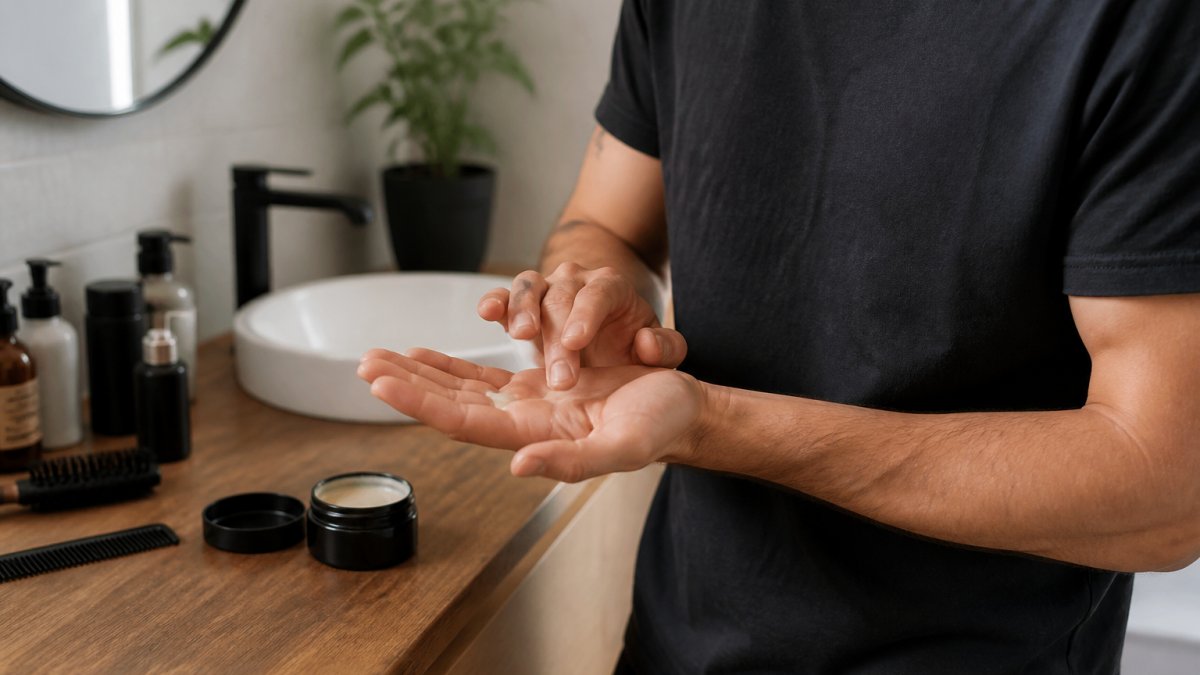
Step-by-Step: Amount, Placement, and Technique
Follow these steps in order to reduce the chance of a greasy finish.
- Start with dry or towel-dried hair. Water left in the hair dilutes the product and makes it sit unevenly.
- Scoop a small amount. Pea to dime size for short hair. Add more only if you need stronger hold.
- Rub between palms until warm. Heat spreads the product thin so it coats evenly.
- Work from back to front. Start at the crown and move forward. This keeps the front hairline from getting overloaded.
- Stay off the scalp. Apply to the hair, not the skin. Product on the scalp is the number one cause of midday grease.
- Build in layers. Add a little at a time rather than one heavy application.
A common mistake is going back for a second scoop without washing your hands first. Residue on your palms transfers straight back into clean hair.
Application by Product Type: Pomade, Wax, Gel, Cream, Serum, and Leave-In
Each styling product family has its own greasy failure mode.
Wax and clay. These are matte by design but can still look greasy if you overload the roots.
Gel. Gel is water-based and rinses clean, but it can flake or look wet.
Serum and oil-based finishing products. Serums are concentrated. One or two drops is enough for most hair lengths.
Dry shampoo and texture powders. These absorb oil and add grip.
Application by Hair Type: Fine, Thick, Curly, and Short
Fine hair shows grease fastest, so use the smallest amount possible and a lightweight formula. Thick hair can handle more product but needs even distribution or the roots stay heavy.
Curly and textured hair needs product worked through the length, not the scalp. Scrunch it in and keep the roots clear. Short hair is the easiest to overload, so keep product near the front and top only.
| Hair Type | Amount | Placement | Best Finish |
|---|---|---|---|
| Fine | Pea size or less | Mid-length to ends | Matte, lightweight |
| Thick | Dime size | Even, back to front | Matte or medium shine |
| Curly/Textured | Dime size | Length only, not roots | Lightweight, flexible |
| Short | Pea size | Top and front only | Matte |
Why Water-Based Hair Styling Products Beat Oil-Based Formulas
Water-based hair styling products win for one simple reason: they rinse clean.
Water-based formulas also feel lighter, spread easier, absorb faster, and leave no flake, the single biggest change you can make for an oily scalp.
Our Matte Hair Paste is water-based and built for this exact problem.

If you prefer a polished, high-shine look, our Sleek Hair Paste offers the same water-based clean rinse with a high-shine finish.

How to Remove Hair Product Buildup
Buildup is the hidden cause of greasy-looking hair, even a small amount of residue left behind each day adds up. Knowing how to stop hair styling products from getting oily starts with a proper cleansing routine, not more product. But first confirm buildup is the problem, since it and natural scalp oil look similar but need different responses.
Buildup vs. Scalp Oil: A Quick Diagnosis
Run this check before changing your routine.
- The strand test. Take a single strand of dry hair and roll it between your thumb and forefinger. If it feels waxy, tacky, or leaves a film on your fingers, you have product buildup. If it feels smooth but oily, your scalp is producing excess sebum.
- The root test. Part your hair at the crown and look at the scalp. White or yellowish flakes near the roots suggest product residue or a reaction to it. Uniform shine along the scalp suggests natural oil.
- The wash test. Wash with your regular shampoo and skip styling products for one day. If the grease returns by evening, your scalp is the bigger factor. If your hair feels clean until you apply product again, buildup is the cause.
Most men dealing with greasy styling products have a mix of both: residue on the hair shaft and excess oil at the scalp. The reset below addresses both.
A Step-by-Step Reset for Product Buildup
Run this reset once a week, or every other week if your scalp is dry or sensitive. The sequence matters more than the products you use.
- Brush or comb dry hair first. This loosens flakes and surface residue before you wet the hair. Use a clean brush and work from ends to roots.
- Rinse with warm water for 30 seconds. Warm water softens product residue so shampoo can lift it. Hot water strips natural oil and triggers more sebum production.
- Apply clarifying shampoo to the scalp only. Use a quarter-sized amount, massage the scalp with your fingertips for a full minute, and let it sit for another minute before rinsing. Do not scrub with your nails.
- Repeat the shampoo once if residue is heavy. A second wash is appropriate during a reset, but not every day.
- Apply conditioner to the ends only. Keep it at least two inches off the scalp. Leave it on for the time listed on the bottle, then rinse thoroughly.
- Skip styling product for the rest of the day if possible. This gives the scalp a chance to rebalance.
- Clean your tools. Wash your brush, comb, and any styling tools with warm water and a drop of shampoo. Product residue on tools transfers back into clean hair.
- Wipe down the hairline and forehead. Use a clean tissue or a gentle facial cleanser to remove any product that migrated to the skin during styling.
How Often to Clarify Without Over-Cleansing
Clarifying shampoo is strong by design. Daily use strips natural oil, and the scalp responds by producing more sebum, which makes hair greasier.
Between clarifying washes, use a regular sulfate-free shampoo or a dry shampoo to absorb oil. Our Volume Refresh Dry Shampoo Powder Brush uses apple cider vinegar, panthenol, and reishi mushroom to absorb oil and refresh roots. It is non-aerosol, talc-free, and safe for daily use.
Fixing Greasy Residue on the Forehead and Hairline
Residue on the forehead and hairline is a placement problem, not a product problem. Product migrates down as you sweat, and the hairline catches it first. Keep product off the skin entirely.
Try these adjustments:
- Apply product starting one centimeter back from the hairline
- Blot the forehead with a tissue after styling
- Wash your face after applying product, not before
- Avoid touching your hair during the day, since hands transfer oil
- Choose a matte finish, which shows less shine at the hairline
If you push your hair back, check the hairline mid-morning, a quick blot with a clean tissue removes the shine before anyone notices.
Choosing the Right Formula for Your Hair and Finish
Pick your formula by finish first, then by hair type. Matte finishes hide oil and suit everyday wear. Shine finishes look polished but show grease faster, so they need a lighter hand.
For most men dealing with oily styling products, a water-based matte paste is the safest starting point: strong hold, clean rinse, never looks wet.
Skip heavy waxes, petroleum-based pomades, and anything sticky between your fingers, sticky products trap oil and are the hardest to wash out.
Conclusion
Greasy styling products come down to three things: too much product, the wrong formula, and buildup left behind. Fix the amount, switch to a water-based formula, and run a weekly reset.
At Gentlemen Republic, we build water-based pastes and gels with clean, responsible ingredients and real barber input. Start with our Matte Hair Paste for a no-grease matte finish, or add the Refined Hair Gel for hard hold without alcohol or petroleum.

Get started with Gentlemen Republic and keep your style sharp from morning to night.
Frequently Asked Questions
How much styling product should I use to avoid greasy hair?
Start with a pea- to dime-sized amount for short hair and add more only if you need stronger hold. Most greasy-looking styles come from overapplication, not from the product itself. Warm the product between your palms first so it spreads evenly, then work it through from back to front. If your hair still looks oily after styling, you used too much. A lightweight matte paste at that amount gives hold without the wet, weighed-down look that heavy scoops create.
Should I apply styling products to wet or dry hair?
It depends on the finish you want. Applying to towel-dried hair helps distribute product evenly and works well for sleek or polished styles. Applying to fully dry hair gives more control and texture, which suits matte pastes and textured crops. For oily-prone hair, dry application is often safer because water plus heavy product can trap moisture and make roots look greasy faster. Whichever you choose, keep product off the scalp and focus on the mid-lengths and ends.
How do I remove product buildup from my hair?
Use a clarifying or deep-cleansing shampoo once a week to strip accumulated residue from styling products, sweat, and sebum. Massage it into the scalp, let it sit for a minute, then rinse thoroughly. Follow with a light conditioner on the ends only. If you style daily, a weekly reset keeps roots from looking heavy. Water-based products rinse out more easily than oil-based ones, so switching formulas can also reduce how much buildup you deal with between washes.
What makes water-based styling products better for oily hair?
Water-based formulas wash out cleanly and leave less residue behind, so they are less likely to weigh hair down or add to an already oily look. They also tend to dry to a matte or natural finish rather than a wet shine. Oil-based and heavy wax products can sit on the hair and scalp, trapping sebum and making roots look greasy by afternoon. If your hair turns oily fast, a water-based paste is the simplest switch you can make.

Share:
How to Tell if Your Hair Is Damaged
Professional Barber Supplies for Retail Sale: 2026 Guide