
Last Updated: October 30, 2026
Quick Summary
To start a barbershop retail line, stock an established professional brand first, since it carries the lowest risk and fastest launch, then set a monthly sales target and budget before buying stock. Track cost, price, and margin per item, and keep your first order small so you reorder only what sells.
- Stocking an established professional brand is the safest first move for most shops.
- Set a monthly sales target and budget before you buy any stock.
- Retail price equals cost divided by one minus your target margin.
- Keep your first order small, then reorder what sells and drop what does not.
- Train every barber on the same two-sentence product recommendation script.
Table of Contents
- Why a Barbershop Retail Line Belongs in Your Business Plan
- Choosing the Best Products to Sell in a Barbershop
- Barbershop Product Pricing That Protects Your Margin
- Barbershop Retail Inventory Management and Startup Costs
- Licenses, Permits, Insurance, and Cosmetic Compliance
- The Barbershop Product Recommendation Script That Sells
- Shop Design, Brand Identity, and Launching Your Retail Line
- Stock Your First Retail Shelf with Gentlemen Republic
- Frequently Asked Questions
Why a Barbershop Retail Line Belongs in Your Business Plan
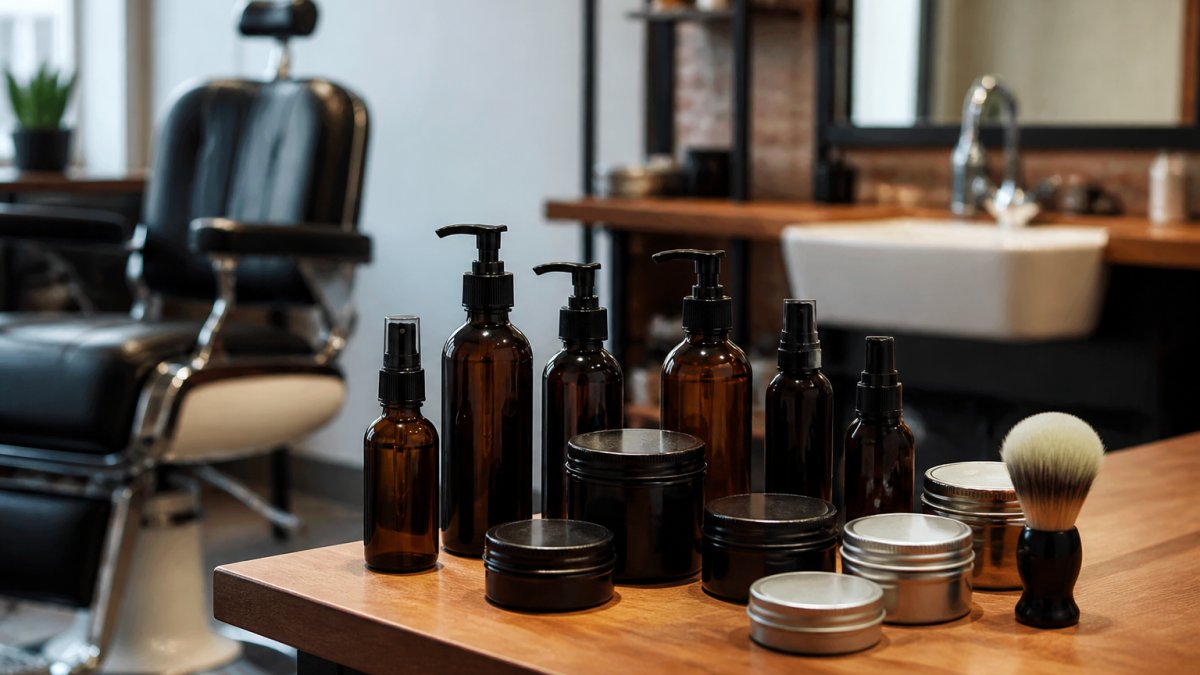
A barbershop retail line is the shelf of grooming products you sell to clients for use at home, and it turns every haircut into a second sale. A well-run shelf can smooth slow weeks and build customer loyalty. The trick is treating it like a business, not an afterthought.
Most owners plan the chairs, the chairs get full, and the shelf stays empty. That is a missed opportunity.
Retail Revenue vs. Chair Revenue
Chair revenue stops the moment the client leaves. Retail revenue keeps working after they walk out the door.
Here is the difference in plain terms:
- Chair revenue: limited by hours, staff, and appointments.
- Retail revenue: limited only by how many clients you can reach.
- Chair revenue: resets to zero every morning.
Retail can add income without adding another chair or another barber.
Setting Retail Goals Before You Buy Anything
Decide what the shelf is for before you stock it. A common approach is to pick one clear goal:
- Add extra income per client visit.
- Keep clients using the same products you use in the chair.
- Build a brand customers associate with your shop.
Write your goal down. Then set a simple monthly sales target and a budget. Without numbers, you will buy on impulse and end up with dead stock.
Choosing the Best Products to Sell in a Barbershop
Products that clients already ask about, that fit your shop's specialty, and that you can reorder reliably are a practical place to start. Start narrow. A tight lineup of proven sellers beats a wide wall of items nobody understands.
Reading Your Target Market and Customer Needs
Your clients tell you what to stock every day. Listen for the questions they ask at the chair.
A practical way to find your product range:
- Note which styles your clients wear most.
- Ask what they use at home and what frustrates them.
- Track which products you reach for during a cut.
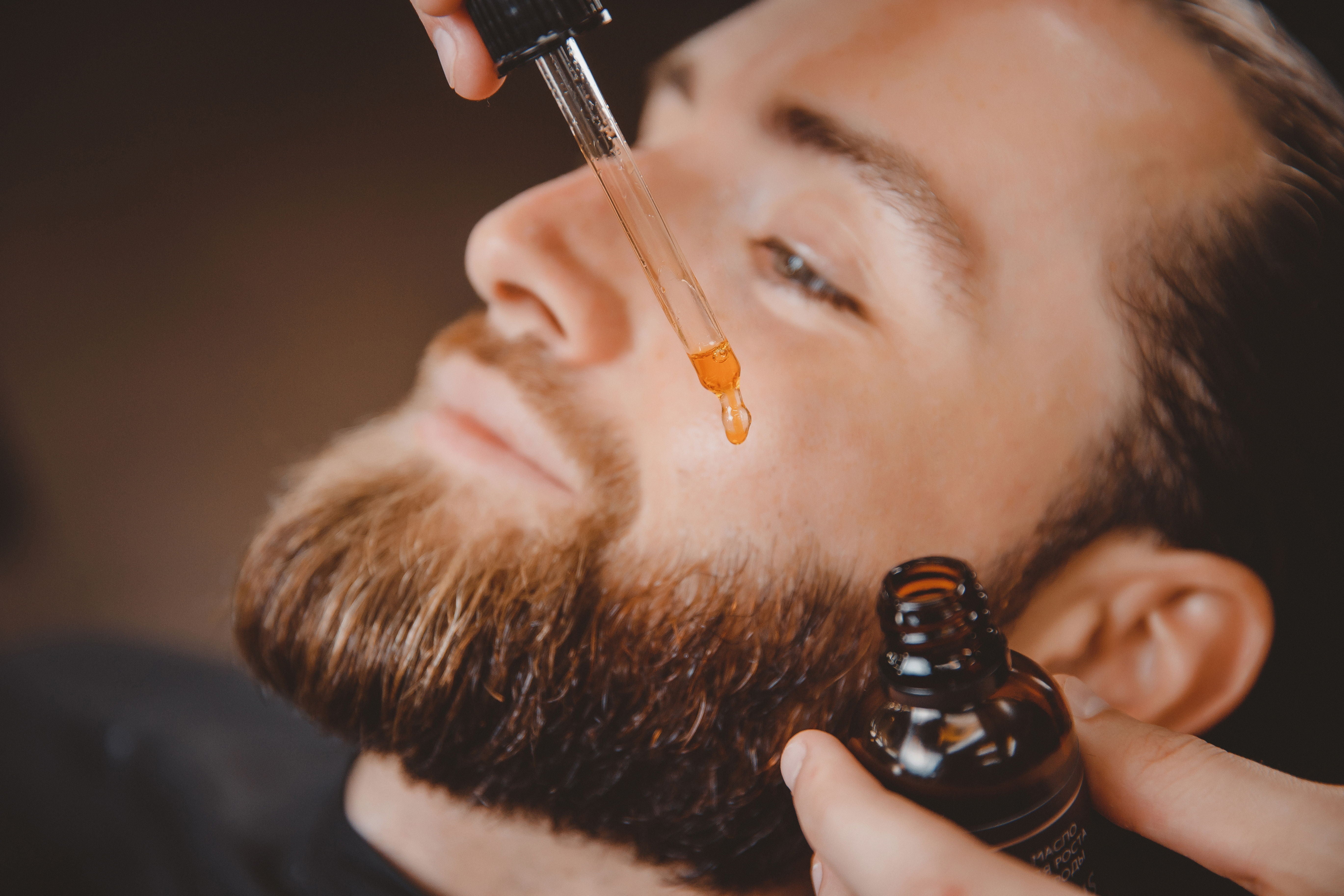
If you want a deeper look at which professional supplies are worth stocking, our guide to professional barber supplies for retail sale breaks down the categories. You can also browse wholesale barber tools and accessories to see what fits your shop. Beard care is a strong category to test, so evaluate the beard range and see if it matches your clients' needs.
Private-Label and Contract-Manufacturing Options
Private label means a manufacturer makes a product and puts your shop's name on it. Contract manufacturing means a factory produces a formula you help design. Both offer a shop-branded retail line, but the trade-offs matter.
Here is how the three routes compare:
- Stock an established professional brand: lowest risk, fastest launch, no formula control. You buy at wholesale, sell at retail, and let the brand handle compliance and labeling. This is the safest first move for most shops.
- Private label: a manufacturer already makes a proven formula and applies your label. Faster and cheaper than custom formulation, but you have little control over the formula and may be one of many shops selling a near-identical product.
- Contract manufacturing: a factory produces a formula you help design, giving you a genuinely unique product. Higher cost, longer lead times, higher minimum order quantities, and formula development fees. Best for shops with a clear brand and proven demand.
Before you sign with any private-label or contract manufacturer, do this due diligence:
- Ask for their FDA registration status. Cosmetic manufacturers may need to register with the FDA under the Modernization of Cosmetics Regulation Act (MoCRA); check current requirements with the FDA (the FDA). A legitimate partner will confirm this without hesitation.
- Request a certificate of insurance showing product liability coverage.
- Get a sample and test it in the chair for at least two weeks before committing to a full run.
- Confirm who owns the formula. With contract manufacturing, you want the formula to be yours, not the factory's.
- Ask for references from other barbershops or salons they supply.
- Read the labeling terms. Confirm the manufacturer will supply compliant ingredient lists and that you, not they, control the claims on the label.
For most shops starting out, an established brand is the safer first move. Once you know which products sell and have a loyal client base, private label or contract manufacturing becomes a realistic next step.
Here is how the three routes to a retail line compare before you commit.
| Route | Best for | Key difference |
|---|---|---|
| Stock an established professional brand | Safest first move for most shops | Lowest risk, fastest launch, no formula control |
| Private label | Faster, cheaper than custom formulation | Manufacturer's proven formula with your label |
| Contract manufacturing | Shops with a clear brand and proven demand | Unique formula you help design, higher costs and minimums |
Barbershop Product Pricing That Protects Your Margin
Barbershop product pricing works when you set a retail price that covers your cost, your time, and a healthy margin. Price too low and the shelf becomes a hobby. Price too high and clients buy elsewhere.
Retail Unit Economics and Budgeting
Unit economics simply means the money each product makes or loses. Know three numbers per item:
- Your cost per unit from the supplier.
- Your retail price to the client.
- Your margin, the gap between the two.
A simple formula:
Retail price = cost ÷ (1 - target margin)
If a product costs you $10 and you want a 50% margin, divide $10 by 0.5 to get a $20 retail price. Keep a small spreadsheet of cost, price, and margin for every item. Review it monthly. Items that sit on the shelf cost you money even when they sell eventually.
Barbershop Retail Inventory Management and Startup Costs
Barbershop retail inventory management is the practice of tracking what you buy, what you sell, and what sits unsold so cash does not get trapped on the shelf. Get this right and the shelf funds itself.
OCTOBER SPECIAL – REFINED GEL 32oz (12 UNITS + FREE PUMPS) →
Startup costs to plan for:
- Opening product stock.
- Shelving and display.
- A simple point-of-sale or inventory tracker.
Keep your first order small. If you are still assembling your back-bar setup, our guide to the essential barber tools kit helps you separate tools you use from products you sell.
Licenses, Permits, Insurance, and Cosmetic Compliance
Selling grooming products brings rules beyond your barber license. You need to know what applies before products hit your shelf, and this is the area most barbershop startup guides skip entirely.
Check these areas:
- Business license and sales tax permit for selling goods. Retail sales of goods typically require a sales tax permit; confirm the requirements with your state's tax agency.
- Cosmetics labeling rules from the FDA cosmetics guidance, which covers ingredient lists, net quantity, and claims.
- General liability insurance that covers retail sales, plus product liability coverage if you sell under your own label.
What MoCRA Means for a Shop-Branded Line
The Modernization of Cosmetics Regulation Act (MoCRA) affects anyone selling cosmetics, including barbershops with a private-label line. Key requirements to confirm with the FDA:
- Facility registration: check the FDA's current requirements for cosmetic manufacturing facilities.
- Product listing: check the FDA's current product listing requirements.
- Adverse event reporting: check the FDA's current adverse event reporting requirements.
If you stock an established brand, the brand handles most of this. If you private-label or contract-manufacture, check your own obligations as the labeled party, since compliance responsibility may fall to you.
Labeling and Claims: What You Can and Cannot Say
Making health or medical claims on a label can trigger FDA action (the FDA). Stick to cosmetic claims such as styling or conditioning, and avoid claims to cure or treat conditions.
Safe cosmetic claims include:
- "Adds shine"
- "Conditions and softens"
- "Helps style and hold"
Avoid claims like:
- "Cures dandruff"
- "Regrows hair"
- "Treats psoriasis"
Confirm current requirements with your state and the FDA before you order custom-labeled goods, and revisit your labeling and registration periodically.
The Barbershop Product Recommendation Script That Sells
A barbershop product recommendation script is a short, repeatable way your barbers suggest a product at the chair. It turns a good cut into a sale without feeling pushy.
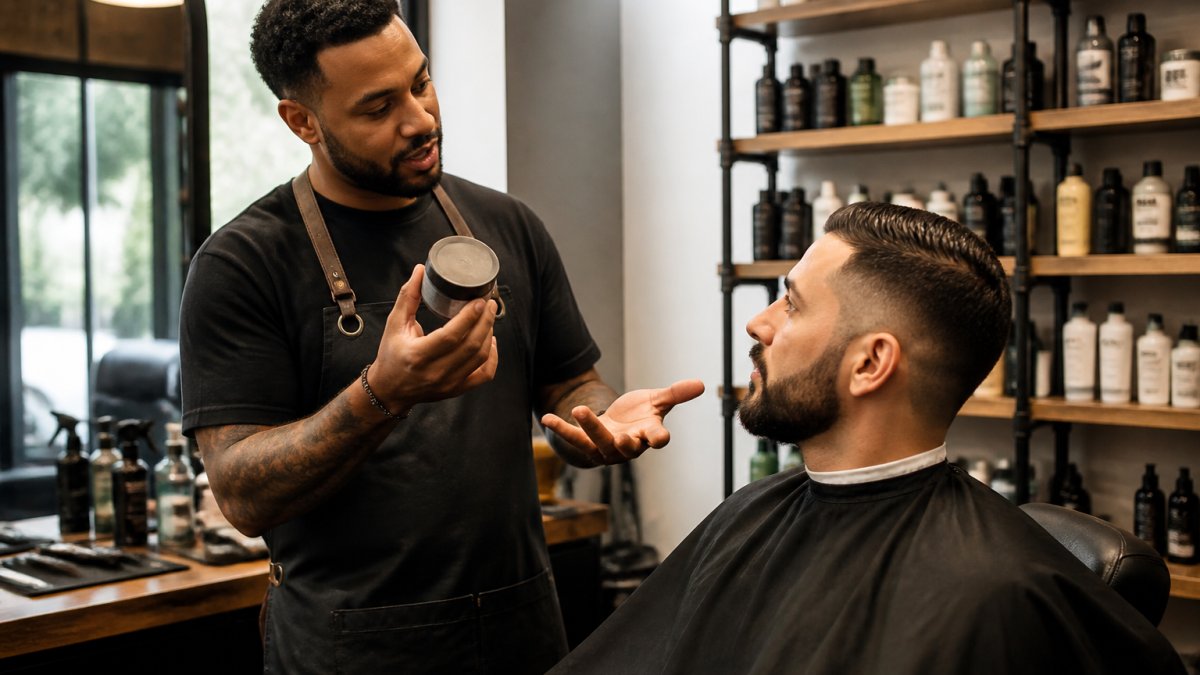
Use this simple framework:
- Name the result: "Your hair will hold this shape all day."
- Name the product: "We used Refined Hair Gel on you today."
- Give one reason: "It's alcohol-free, so it won't dry your scalp."
- Point to the shelf: "It's right there if you want to keep the look."
Keep it to two sentences. Train every barber on the same script so the experience is consistent.
Shop Design, Brand Identity, and Launching Your Retail Line
Shop design and brand identity make the shelf feel like part of your shop, not a random add-on. A clean, well-lit display near the mirror does more than a crowded corner.
Launch steps:
- Place best-sellers at eye level near the chair.
- Add small signs with the product name and one benefit.
- Train staff so everyone can explain each item.
Your brand identity should carry onto the shelf. Match labels, colors, and tone to the shop so the retail line feels native.
Stock Your First Retail Shelf with Gentlemen Republic
The fastest way to launch is to stock a proven professional brand instead of building one from scratch. At Gentlemen Republic, we make high-performance grooming products rooted in real barbering expertise, using clean, responsible ingredients.
Here is one way to build an opening lineup from the Gentlemen Republic range:
- Styling: Refined Hair Gel, with hard hold, high shine, and an alcohol-free, paraben-free, water-soluble formula that will not flake.
- Control: Sleek Hair Paste for a polished finish with superior styling control.
- Aftercare: After Shave to round out the shelf for daily grooming.
Gentlemen Republic's October wholesale specials make stocking easier. The Refined Gel 32oz case gives you 12 units plus free pumps for $180. The Sleek Paste case adds a free 8oz for $240. And the After Shave special pairs a 32oz with a free 4oz for $20. To see the full range and pick your opening lineup, explore all Gentlemen Republic products.


Frequently Asked Questions
How do I start selling retail products in my barbershop?
Start with a small, curated assortment of products you already use on clients, such as a hard-hold gel, a paste, and an after-shave. Set a retail budget, price each item at roughly double your wholesale cost, and place stock where clients can see it during their cut. Track every sale for the first 60 days so you know what moves before you reorder.
What products should a barbershop sell?
Stick to products tied to services you perform: styling gels and pastes, beard oil and balm, after-shave, and a simple skincare item. Ask clients what they struggle with at home and stock the answer. A barbershop retail line built around your top three services is easier to recommend, easier to manage, and turns over faster than a broad catalog of items nobody asks about.
How much inventory should a barbershop start with?
Buy enough to cover four to six weeks of expected sales, not a full year. For most shops that means a few cases of your core styling products and a single case of secondary items. Wholesale case deals, like Gentlemen Republic's 12-unit Refined Gel case at $180, let you test demand without tying up cash. Reorder based on actual sell-through, not guesswork.
Should a barbershop create its own grooming product line?
Only after you have proven demand for third-party products. Private label requires cosmetic compliance, labeling, and minimum order quantities. Stocking an established professional brand first lets you learn which SKUs sell, and that sales data can help you decide later whether a custom line is worth the investment.
Starting a barbershop retail line is not about stocking everything. It is about picking a tight, reliable lineup your clients trust and your barbers can explain. That is where Gentlemen Republic helps. Our professional-grade hair, beard, and skin care products come from real barbering knowledge, with clean ingredients and consistent quality batch to batch. Get started with Gentlemen Republic and give your clients the same results at home that they get in your chair.


Share:
The Best Professional Hair Pomade for Thick Hair