
Table of Contents
- Men's Hairstyles 2026: The Cuts Defining the Year
- How to Style Men's Hair: A Step-by-Step Routine That Works
- Hair Styling Products for Men by Hair Type
- How to Use Hair Clay for Men (and When Paste Beats Clay)
- Hold, Shine, and Finish: Matching the Product to the Style
- Maintenance Schedules and What to Tell Your Barber
- Conclusion: Building a Styling Routine You'll Actually Keep
- Frequently Asked Questions
Last Updated: October 14, 2026
Men's Hairstyles 2026: The Cuts Defining the Year
The cut decides 80% of how your hair looks; men's hair styling products decide the rest. At Gentlemen Republic, we work with barbers every day, and the same three silhouettes keep walking out of the chair this year.
Texture over shine is the defining shift. Men want movement, not helmet hair.
Textured Crop and Textured Pompadour
The textured crop is the most requested cut right now: short on the sides, choppy on top, with a natural neckline instead of a hard line.
The textured pompadour adds height to that same energy. Ask for a taper fade at the sides and four to five inches on top. The volume comes from how you dry it, not how much product you scoop.
Modern Mullet, Wolf Cut, and Boy Bangs
The modern mullet and the wolf cut are the same idea at different intensities: shorter at the front, longer at the back, layered so nothing sits flat. Boy bangs soften the front hairline and suit fine hair that wants the appearance of density.
How to Style Men's Hair: A Step-by-Step Routine That Works
What separates a style that holds until 6 p.m. from one that collapses by lunch is the sequence, the moisture level at each step, and the temperature you dry at.
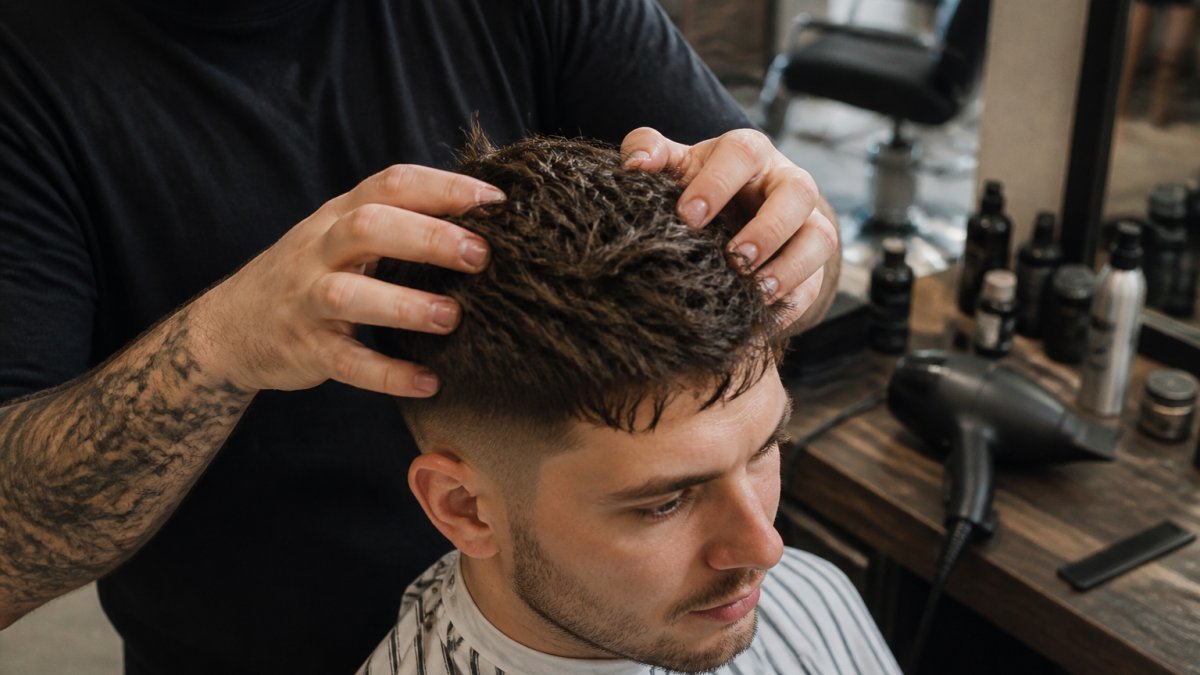
Phase 1: Prep (60 to 90 seconds)
Start on damp hair, roughly 60% dry, still cool and clumping slightly when you squeeze it. Bone-dry hair will not accept product evenly; soaking-wet hair dilutes it.
- Towel-dry first, then wait. Rushing from shower to product is the most common reason a style looks patchy.
- Apply a heat protectant if you blow dry daily. Repeated heat without protection causes dull, straw-like texture over time.
- Comb the hair into its natural fall direction first, so you work with cowlicks and growth patterns instead of against them.
Phase 2: Build the Foundation with Heat (2 to 4 minutes)
This is the phase most men skip, and it decides whether the style has any structure.
- Section the top away from the sides with a clip or your non-dominant hand and work one zone at a time.
- Pre-dry the roots against the direction of growth. Point the nozzle at the root and push the hair the opposite way it lies, for a textured crop or pompadour, upward and slightly forward.
- Keep the dryer moving. Hold it 6 to 8 inches from the scalp; parking it in one spot overheats the cuticle and creates frizz.
- Switch to a vent brush or round brush for the top. A vent brush gives lift with a matte finish; a round brush gives a smoother bend for pompadours and slicked-back styles.
- Dry to about 90% before you touch product. Product on wet hair sets soft and flat; on nearly dry hair it sets where you put it.
Phase 3: Apply Product in Layers, Not One Scoop (1 to 2 minutes)
One big scoop is why styles look greasy at the roots and dry at the ends. Layer it instead.
- First layer, the base. Take a pea-sized amount, emulsify it between your palms, then work it through from back to front, starting at the crown. This layer is for control, not hold.
- Second layer, the shape. Take a smaller amount and apply only where you need structure: the front for a pompadour, the top for a crop, the sides for a slick-back.
- Use your fingers for texture, a comb for definition. Fingers give the piecey, undone look that defines 2026 styling; a comb gives cleaner separation for formal looks.
Phase 4: Lock In the Shape (30 to 60 seconds)
Hair holds the shape it cools in, the difference between volume that lasts all day and volume that dies in an hour.
- Finish with a shot of cool air while the hair is still shaped the way you want it; the cool air sets the hydrogen bonds in that position.
- Do not touch it while it cools. Running your hands through it flattens the lift you just built.
- Break the cast at the end. Once cool, run your fingertips through the top to soften stiffness and separate the strands, turning a styled look into a natural one.
- Finish with a light mist of spray only if you need all-day hold. For most everyday styles, product plus the cool-set is enough; spray is for humidity, long days, or formal events.
How the Routine Changes by Haircut
- Textured crop: Skip the round brush. Dry upward with a vent brush, use a matte paste, and finish with your fingers.
- Textured pompadour: Dry the front up and back with a round brush for height, then set with cool air. Use a stronger-hold paste or clay so the height survives the day.
- Modern mullet or wolf cut: Dry the back downward and the top forward. Use sea salt spray on damp hair for grip, then a light paste to define layers without weighing them down.
Hair Styling Products for Men by Hair Type
Matching the product to your hair type matters more than matching it to the trend. The wrong formula fights your natural pattern all day.

| Hair Type | Hold Needed | Finish | Gentlemen Republic Pick |
|---|---|---|---|
| Fine or thinning | Medium | Matte | Classic Hair Pomade ($22) |
| Thick or coarse | Strong | Matte | Matte Hair Paste ($22) |
| Curly or coily | Strong | Natural | Sea Salt Spray ($22) |
| Slick or formal | Hard | High shine | Refined Hair Gel ($18) |
Fine and Thinning Hair
Fine hair needs volume more than grip. The American Academy of Dermatology's hair care guidance notes that gentle handling and lightweight products reduce stress on fragile strands. Reach for a medium-hold, matte formula and apply it at the roots, not the ends.

Thick, Curly, and Coily Hair
Thick and curly hair can carry stronger hold without looking stiff. Apply sea salt spray to damp hair, scrunch, and air dry or diffuse on low heat. Never comb dry curls, it breaks the pattern you just set.
How to Use Hair Clay for Men (and When Paste Beats Clay)
How to use hair clay for men: scoop a pea-sized amount, emulsify it fully between your palms, then work it through dry or towel-dried hair from back to front. Clay gives strong hold with a matte finish and adds thickness to fine hair.
Paste beats clay when you want flexibility. Clay sets firm. Paste, like our Matte Hair Paste, stays pliable enough to restyle at 3pm without re-wetting.
Hold, Shine, and Finish: Matching the Product to the Style
Hold and shine are two separate dials, and most men only adjust one. A slicked-back style wants hard hold with high shine; a textured crop wants strong hold with zero shine.
The third dial is finish, matte, natural, or glossy, and the fourth is flexibility, whether the product sets firm or stays restyleable. Get all four right and the product disappears into the style; get one wrong and the style fights you.
The Four Dials, Defined
- Hold: How firmly the product keeps hair in place. Light hold lets hair move; strong hold keeps it put; hard hold is for styles that must not budge.
- Shine: How much light the product reflects. Matte looks dry; natural sits in between; high shine looks wet or glossy.
- Finish: The visual texture left behind, piecey and separated, smooth and polished, or wet and slick.
Product Categories and What Each One Actually Does
| Product | Typical Hold | Typical Shine | Flexibility | Best For |
|---|---|---|---|---|
| Clay | Strong | Matte | Low, sets firm | Textured crops, short styles, fine hair that needs thickness |
| Paste | Medium to strong | Matte to natural | High, restyleable | Everyday texture, pompadours, medium-length styles |
| Cream | Light to medium | Natural | High | Wavy and curly hair, soft definition, low-maintenance looks |
| Pomade (water-based) | Medium to strong | Natural to high | Medium | Slicked-back, side parts, classic styles that need some shine |
| Pomade (oil-based) | Strong | High | Low, sets firm | Formal slick-backs, styles that must survive humidity |
| Gel | Hard | High | Low, sets firm | Slicked-back, wet looks, formal events |
| Sea salt spray | Light | Matte | High | Pre-styling, adding grip and volume to damp hair, wavy and curly textures |
| Hairspray | Light to hard | Varies | Low | Finishing and locking a style for long days or events |
Matching the Product to the Style
- Textured crop: Matte paste or clay, strong hold with zero shine so the texture reads as natural. Apply to nearly dry hair and finish with your fingers.
- Textured pompadour: Strong-hold paste or clay for height, plus a light mist of spray for long days. Avoid high-shine products, they flatten the texture.
- Modern mullet or wolf cut: Sea salt spray on damp hair for grip, then a light paste or cream to define the layers. Heavy products pull the length down and kill the shape.
How to Read a Product Label
Most styling products are built on a handful of ingredient families, and knowing them tells you more than the marketing copy on the jar.
- Waxes and wax blends (beeswax, carnauba) give hold and a matte-to-natural finish, but can feel heavy on fine hair.
- Clays (bentonite, kaolin) absorb oil and add grip and thickness, the driest-feeling option.
- Water-based formulas wash out with water alone and stay flexible, the safest default for daily use.
Consumer Reports' guide to reading personal care labels is worth a read if you want to understand what you're putting in your hair.
The Layering Rule
You do not have to choose one product. Layer by function:
- Pre-style on damp hair with a sea salt spray or light cream for grip and volume.
- Build the shape with a paste or clay once the hair is nearly dry.
- Lock it in with a light mist of spray only if the day demands it.
This is why a single "all-in-one" product rarely delivers: a formula strong enough for a pompadour is too heavy for a textured crop, and one light enough for fine hair will not hold a slick-back. Match the product to the job.
Maintenance Schedules and What to Tell Your Barber
Most cuts need a refresh every three to five weeks. Fades lose their edge fastest, around the two-week mark, while scissor cuts on longer styles can stretch to six.
When you sit down, be specific: the length you want on top in inches, where the fade starts, and whether you want a natural neckline or a hard line. Bring a photo.
U.S. Bureau of Labor Statistics data on barbers and cosmetologists confirms that barbering remains a licensed trade with formal training requirements, so a licensed barber is trained to translate your request into a cut that suits your hair pattern.
Conclusion: Building a Styling Routine You'll Actually Keep
The hardest part of men's hair styling isn't learning the techniques, it's keeping a routine past the first week, when the novelty wears off. Consistency separates a style that works from one that never quite gets there.
At Gentlemen Republic, we build products for exactly that: dependable daily results without a ten-step process. Start with the Matte Hair Paste for everyday texture, add the Sea Salt Spray for volume on damp hair, and keep the Refined Hair Gel for slicked-back days.

Get started with Gentlemen Republic and build a routine that holds up past week one.
Frequently Asked Questions
What are the best men's hairstyles for 2026?
The cuts getting the most requests at the chair are the textured crop, textured pompadour, modern mullet, wolf cut, and boy bangs. Slicked-back styles and low fades with a soft taper or natural neckline are holding steady because they grow out cleanly. The common thread is texture over shine: controlled length with movement, not a stiff, glued-down finish. Pick the cut that matches your hair pattern and how often you're willing to book a barber.
How do I choose the right hair styling product for my hair type?
Start with hold and finish, then match to your texture. Fine or thinning hair does best with lightweight options like a medium-hold water-based pomade or a sea salt spray for lift without weight. Thick or coarse hair needs more grip, so an 8/10 hold matte paste or hard-hold gel works better. Curly and wavy hair benefits from a matte paste that defines pattern without crunch. If your scalp gets oily by midday, choose water-based formulas that rinse clean.
What is the difference between pomade, clay, wax, and hair paste?
Pomade generally delivers shine and flexible hold, with water-based versions washing out easily. Clay and matte paste give strong hold with a dry, matte finish and added texture, which suits crops and messy styles. Wax sits between the two, offering medium hold with a slight sheen. In practice, the label matters less than the numbers: check the hold rating and whether the finish is matte or shiny, then pick the one that matches the look you want.
How much hair product should men use?
Start with a pea- to dime-sized amount for short hair and build from there. Rub it fully between your palms until it disappears, then work it through from back to front. Fine hair usually needs less; thick or curly hair can take more, applied in two lighter passes rather than one heavy scoop. Overloading is the most common reason styles look greasy or collapse by lunch, so add in small increments until the shape holds.
How do I make a men's hairstyle last all day?
Three things do most of the work: start on damp or towel-dried hair so the product distributes evenly, apply a texturizing spray or sea salt spray at the roots for lift before your main styler, and finish by letting the shape cool before you touch it. For humid days, a hard-hold gel or high-hold paste holds better than a medium-hold pomade. Keep a small tin in your bag for a quick restyle rather than re-wetting your whole head.
How do I style curly or wavy men's hair without frizz?
Apply product to hair that's still about 70% wet, scrunch upward instead of combing, and let it air dry or use a diffuser on low heat. A matte paste or sea salt spray adds definition and grip without flattening the curl pattern. Avoid brushing dry curls, which breaks the pattern and creates frizz. If your hair tends toward dryness, use salt-based texturizers two or three times a week rather than daily.
How often should I get my hair cut to keep a 2026 style sharp?
Most textured crops, fades, and taper styles need a visit every three to four weeks to keep the shape clean. Longer styles like the modern mullet or wolf cut can stretch to six to eight weeks because they're built on controlled length rather than tight edges. Ask your barber to leave a natural neckline if you want more time between appointments. Bring a photo and describe how you style it at home so the cut works with your routine.

Share:
How to Fix Dry Hair Naturally: 7-Step Routine
How to Get a Professional Barber Look: 7 Steps