


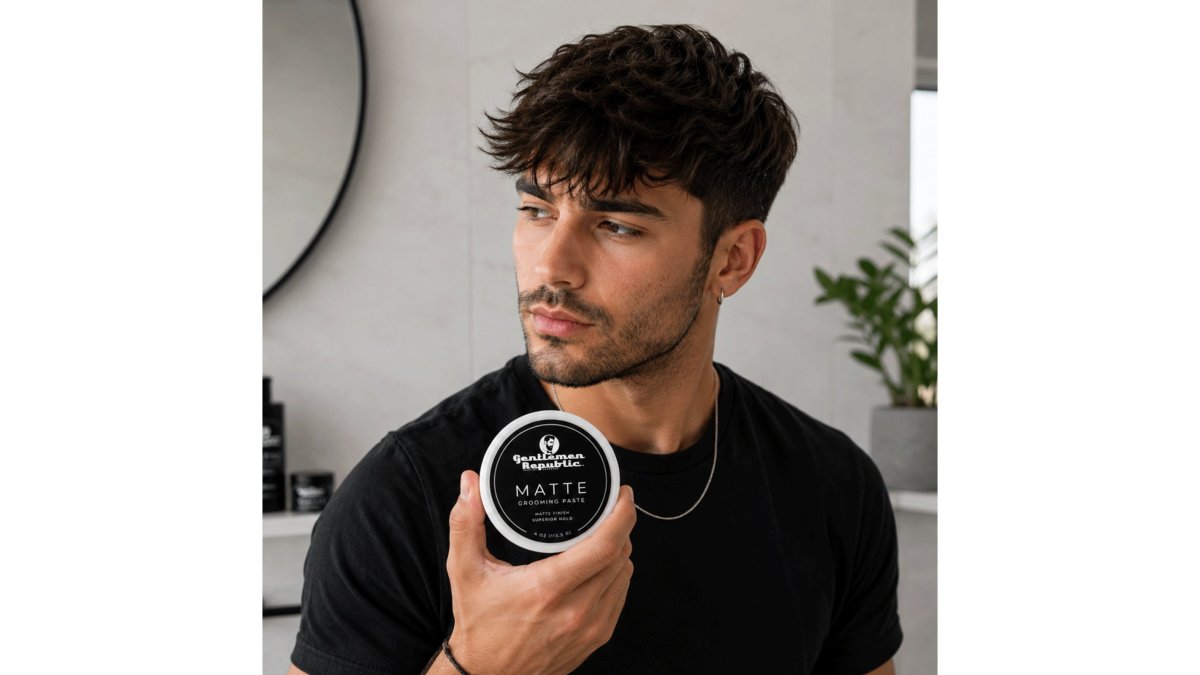
Last Updated: November 12, 2026
Quick Summary
Barbers prefer professional grade products because they deliver predictable hold, consistent texture, and formulas built to survive twenty-plus cuts a day. Professional barber products carry a higher load of polymers, waxes, or clays, so a smaller scoop delivers the same hold and lowers cost per service.
- Professional formulas carry a higher percentage of actives so a smaller scoop delivers the same hold.
- Check hold at hour one versus hour six to compare two products in the chair.
- Match hold strength and finish to hair texture, density, and the style the client wears.
- Cost per service equals jar price divided by services per jar, plus waste per service.
- The products you use on clients become the products they ask to buy, turning service into recurring revenue.
Table of Contents
- Why Barbers Prefer Professional Grade Products
- Barber-Grade Hair Products vs. Store-Bought: What Changes on the Shelf
- How Barbers Choose Hair Products for Different Clients
- The Professional Tools That Make Products Work
- Cost, Value, and What Clients Actually Pay For
- Hygiene, Consistency, and the Shop's Reputation
- Stocking Professional Barber Products in Your Shop
- Frequently Asked Questions
Why Barbers Prefer Professional Grade Products
Walk into any working barbershop and you'll notice the station setup looks nothing like a drugstore shelf. The reason barbers prefer professional grade products comes down to control: predictable hold, consistent texture, and tools and formulas built to survive twenty-plus cuts a day. At Gentlemen Republic, our formulations are rooted in professional barbering expertise.
The Real Difference in Formulation
Professional-grade products are formulated for repeatable results under repeated use, not for a single good hair day.
What most guides miss is that formulation is a trade-off, not a ladder. A gel built for hard hold and high shine behaves very differently from a cream built for movement. Neither is "better" until you know the hair in the chair. Our Refined Hair Gel, for example, is alcohol-free with no beeswax or petroleum, which is the kind of formulation choice that matters when a client sits down three times a week.
Barber-Grade Hair Products vs. Store-Bought: What Changes on the Shelf
| Factor | Barber-Grade | Store-Bought |
|---|---|---|
| Hold consistency | Formulated to a fixed performance spec across batches | Tuned for first-impression feel; batch variation is tolerated |
| Active-ingredient concentration | Higher load of the polymers, waxes, or clays that create hold | Diluted for easy scoop and soft jar feel |
| Formulation focus | Performance under repeated daily use and re-styling | Single-application experience and scent |
| Tool compatibility | Built to work with clippers, combs, brushes, and hot towels | Built for home use with fingers and a comb |
| Cost per client | Lower over time because less product is used per service | Higher per application because more product is needed |
| Replacement cycle | Predictable and planned around client volume | Frequent and reactive |
What Actually Changes in the Formula
The difference is not a single ingredient, it is how the formula is balanced. Four variables do most of the work:
- Polymer and wax load. Hold comes from film-formers (PVP, VP/VA copolymers), waxes (beeswax, carnauba, microcrystalline), or clays (kaolin, bentonite). Professional formulas typically carry a higher percentage of these actives so a smaller scoop delivers the same hold. Store-bought formulas often reduce the load so the product scoops easily and feels soft in the jar, the same softness that collapses on coarse or humidity-prone hair by mid-afternoon.
- Plasticizer and emollient balance. A formula that holds hard but cracks or flakes has the wrong plasticizer ratio. Barber-grade products are usually tuned so the film stays flexible through a workday and through a hot towel, rather than shattering at the neckline.
- Solvent system. Alcohol-based gels set fast and dry matte; alcohol-free gels and creams rely on water and emulsifiers and stay workable longer. Neither is better in the abstract, the choice depends on the hair in the chair and the finish the client wants.
- Preservative and pH design. Products built for a shop are formulated to stay stable across many openings of the same jar and to sit comfortably near the scalp's natural pH. That is a formulation choice, not a marketing claim, and it is one reason professional products often carry a different preservative system than drugstore equivalents.
What most guides miss is that formulation is a trade-off, not a ladder. A gel built for hard hold and high shine behaves very differently from a cream built for movement. Neither is "better" until you know the hair in the chair. Our Refined Hair Gel, for example, is alcohol-free with no beeswax or petroleum, which is the kind of formulation choice that matters when a client sits down three times a week.
How to Compare Two Products Without Relying on Claims
A repeatable comparison beats a slogan. Most practitioners find that five checks separate a professional-grade product from a store-bought one in the chair:
- Hold at hour one vs. hour six. Apply the same amount to the same hair type and check the finish at both points. A product that looks identical at hour six is doing the job; one that has collapsed or flaked is not.
- Washability. Count how many shampoo passes it takes to clear the product. Hard-to-wash formulas build up and change how the next cut behaves.
- Flake and residue test. Work the product through dry hair, let it set, then run a comb through it. Flaking shows up immediately on a black apron or a dark towel.
- Amount used per service. Weigh or eyeball the scoop. A higher-concentration formula that needs half the scoop changes the cost math entirely.
- Behavior under a hot towel. A towel test reveals whether the film re-softens cleanly or breaks down into residue.
How Barbers Choose Hair Products for Different Clients
Barbers choose hair products by matching hold strength and finish to hair texture, density, and the style the client actually wears. A product that works on fine, straight hair can weigh down thick, curly hair, and a lightweight cream won't hold a slick-back on coarse hair through a humid afternoon.
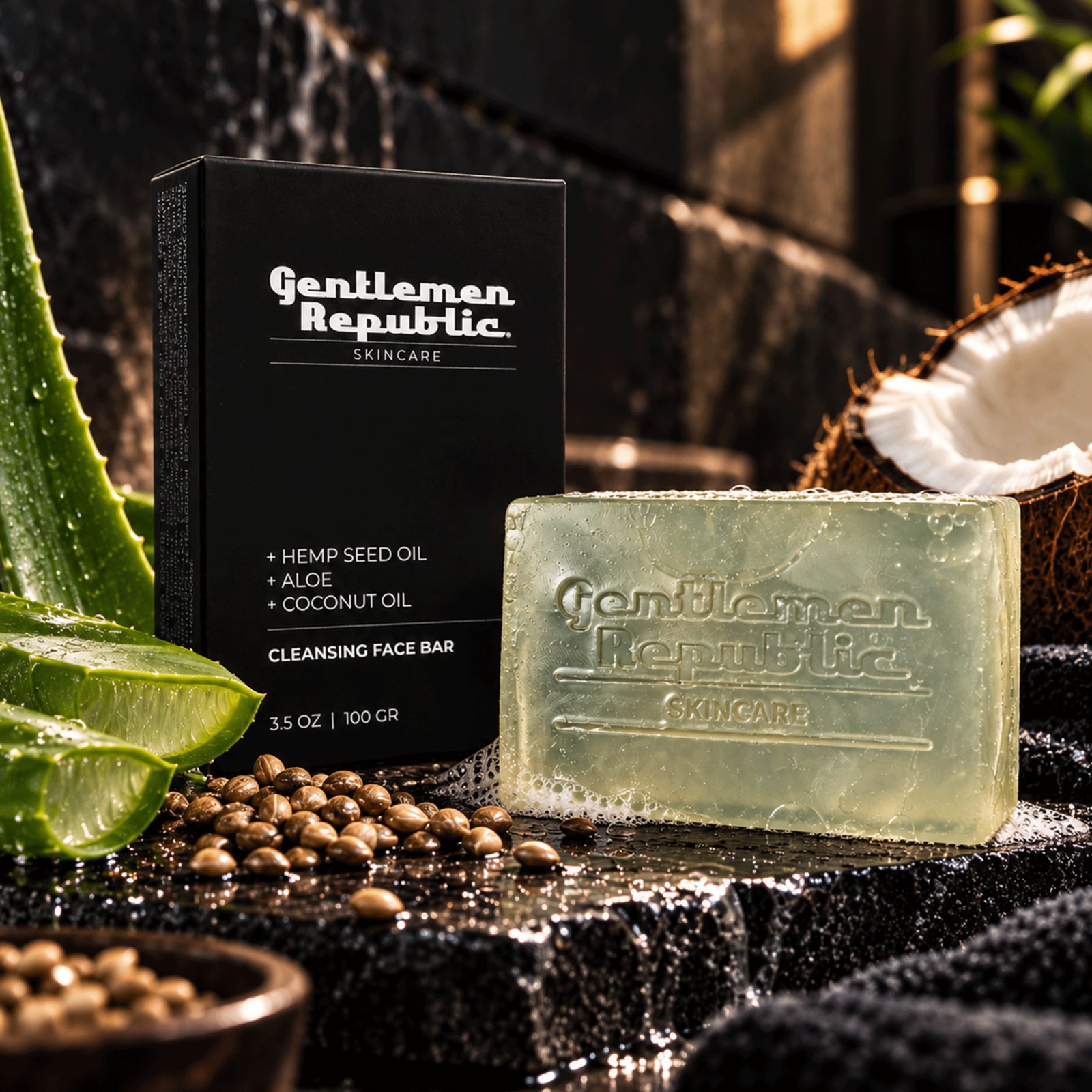
Matching Hold and Finish to Hair Texture
The practical framework we use comes down to three questions:
- How much hold does the finished style need? A textured crop needs less than a slick-back.
- What finish does the client want? Matte, natural, or high shine.
- How does the hair behave by hour six? Oily scalps and humidity change the answer.
Fine hair usually wants lighter products with moderate hold to avoid collapse. Thick or textured hair tolerates harder holds and benefits from products that distribute evenly. Clients with sensitive skin should lean toward alcohol-free formulas. Our Texture Hold Styling Bundle pairs texture and hold for exactly this kind of matching, and it's the bundle we reach for when a client's hair type sits between categories.
The mistake is buying one product for every chair. The pros who get consistent results keep two or three hold levels on the station and switch by client.
The Professional Tools That Make Products Work
Tools and products are a system, not separate purchases. A great gel applied with the wrong comb or a dull blade produces a worse result than a modest product applied with precision tools.
Consider the clipper. Our Essence Professional Clipper runs a 10,000 RPM motor with DLC blade technology. The Precision Pro Trimmer is listed with a 2-hour cordless runtime and maintains full cutting speed throughout the charge.
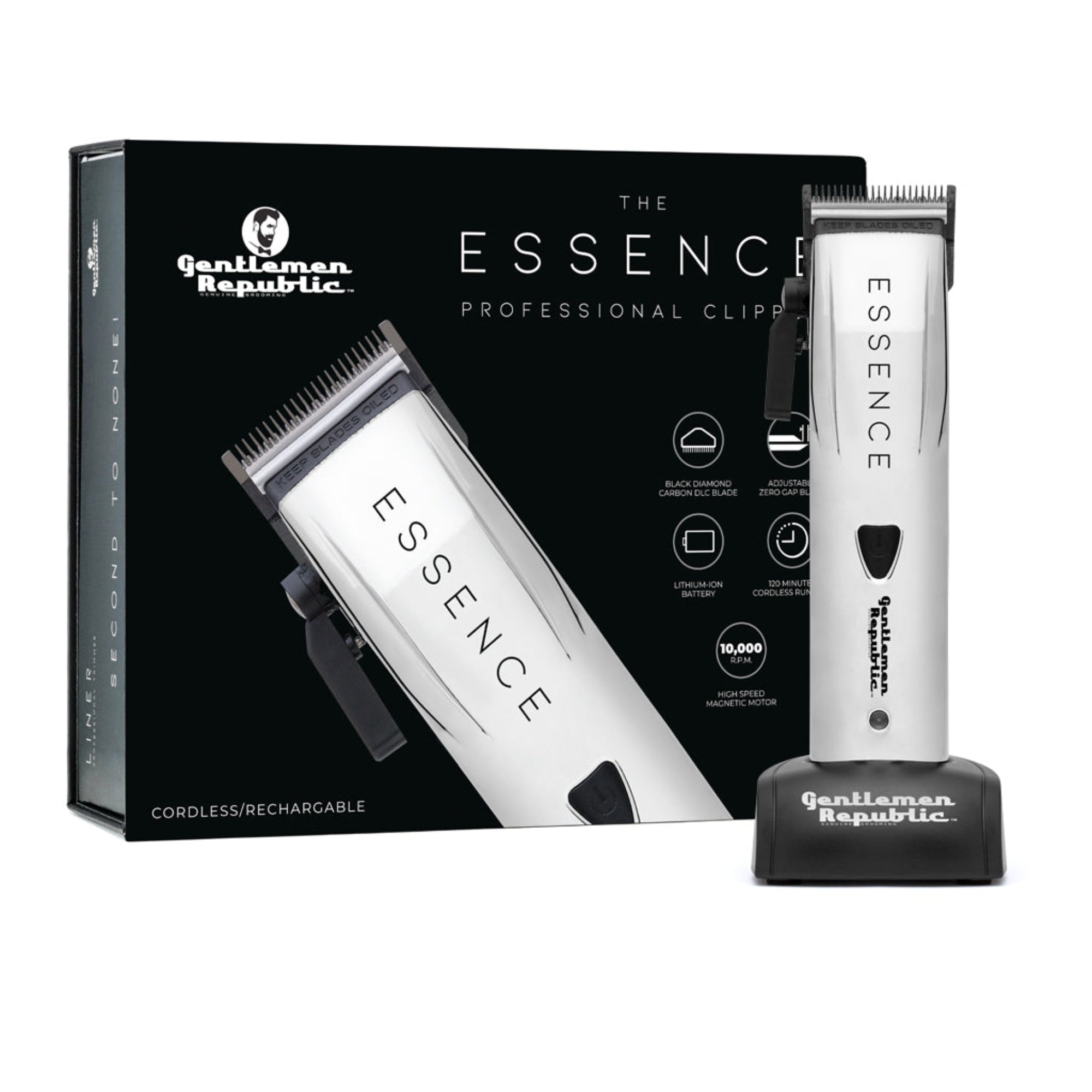
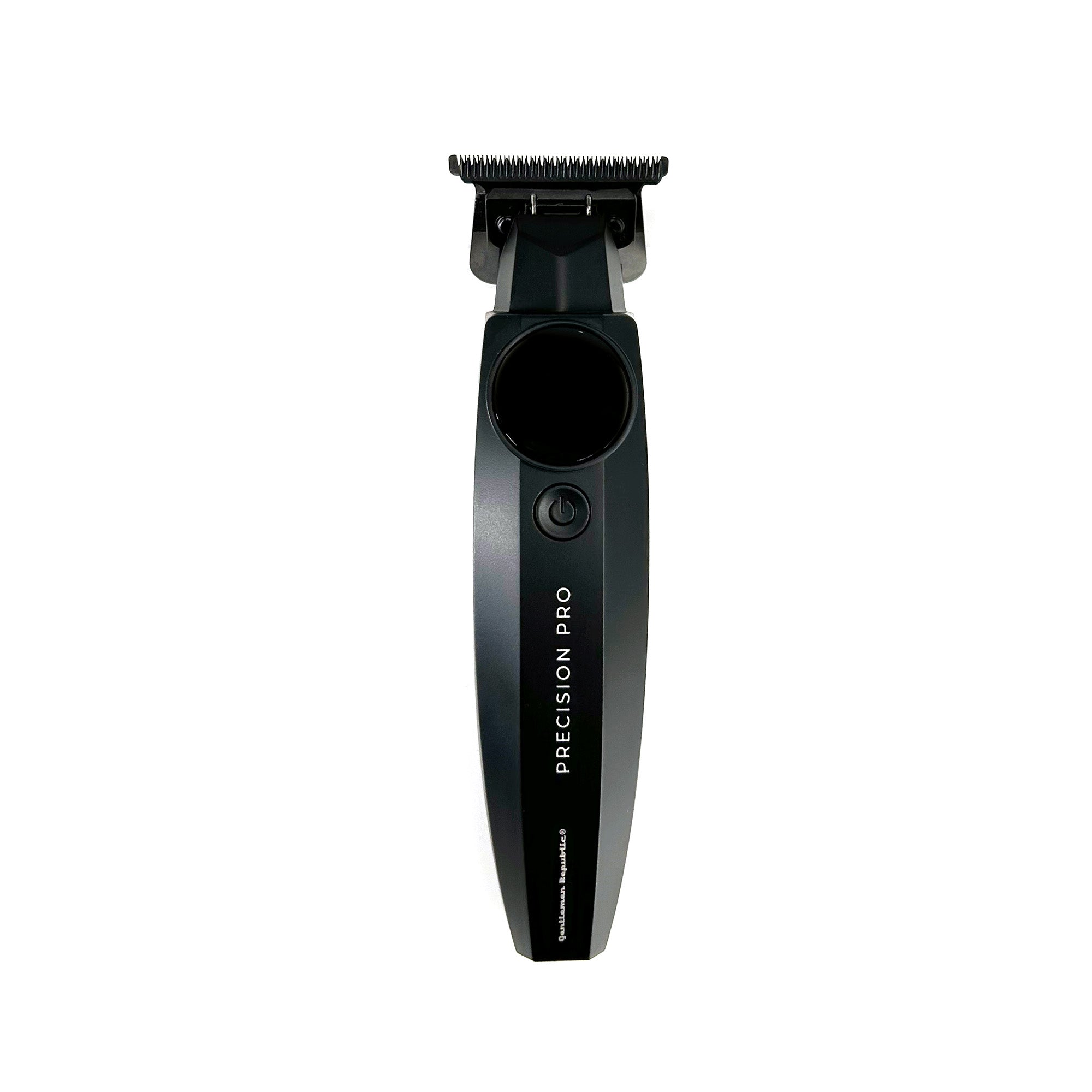
What most guides miss is that consistency in tools is what lets a barber trust a product's behavior. When the clipper delivers the same cut every time, you can judge a styling product on its own merits. Browse the full tools and accessories range to see how the system fits together.
Cost, Value, and What Clients Actually Pay For
The gap between those two statements is where most barbershop budgeting goes wrong, because the number on the shelf tag is not the number that matters, cost per service is.
The Cost-Per-Service Formula
The math is simple, and it is the same math a shop should run on every product on the station:
Cost per service = (Jar price ÷ Number of services per jar) + (Waste per service × Jar price ÷ Jar size)
Three inputs drive the result:
- Jar price. The sticker price.
- Services per jar. How many clients one jar actually covers at the scoop size the barber uses.
- Waste. Product lost to over-scooping, drying out, or tossing a half-used jar when it changes consistency.
A Worked Example, With Placeholder Numbers
Watch out: comparing jars by sticker price alone is the single most common costing mistake in a barbershop, because it ignores services per jar and waste, the two inputs that decide the real number.
What Clients Actually Pay For
That is why the value calculation has to include the client-retention side, not just the product side:
- Rebooking rate. A finish that holds to hour six supports the next appointment; one that collapses does not.
- Retail margin. The products a barber uses on clients become the products clients ask to buy, and a curated shelf turns a service into recurring revenue. The margin on a professional retail line is a separate line item from the cost per service, and it changes the shop's overall economics.
- Client cost per wear. For the client, a professional product that needs a smaller amount per styling and lasts longer often costs less per use than a drugstore jar that gets used up faster, the same ratio, viewed from the other side of the chair.
For shops buying at volume, wholesale barber tools and accessories pricing changes the equation further, since the cost per service drops again when you're not paying retail markup on every replacement.
Value, in short, is measured in appointments served, not ounces purchased.
Hygiene, Consistency, and the Shop's Reputation
A shop's reputation is built on repeatable results. Clients notice when their cut looks the same in week three as it did on day one, and they notice when it doesn't.
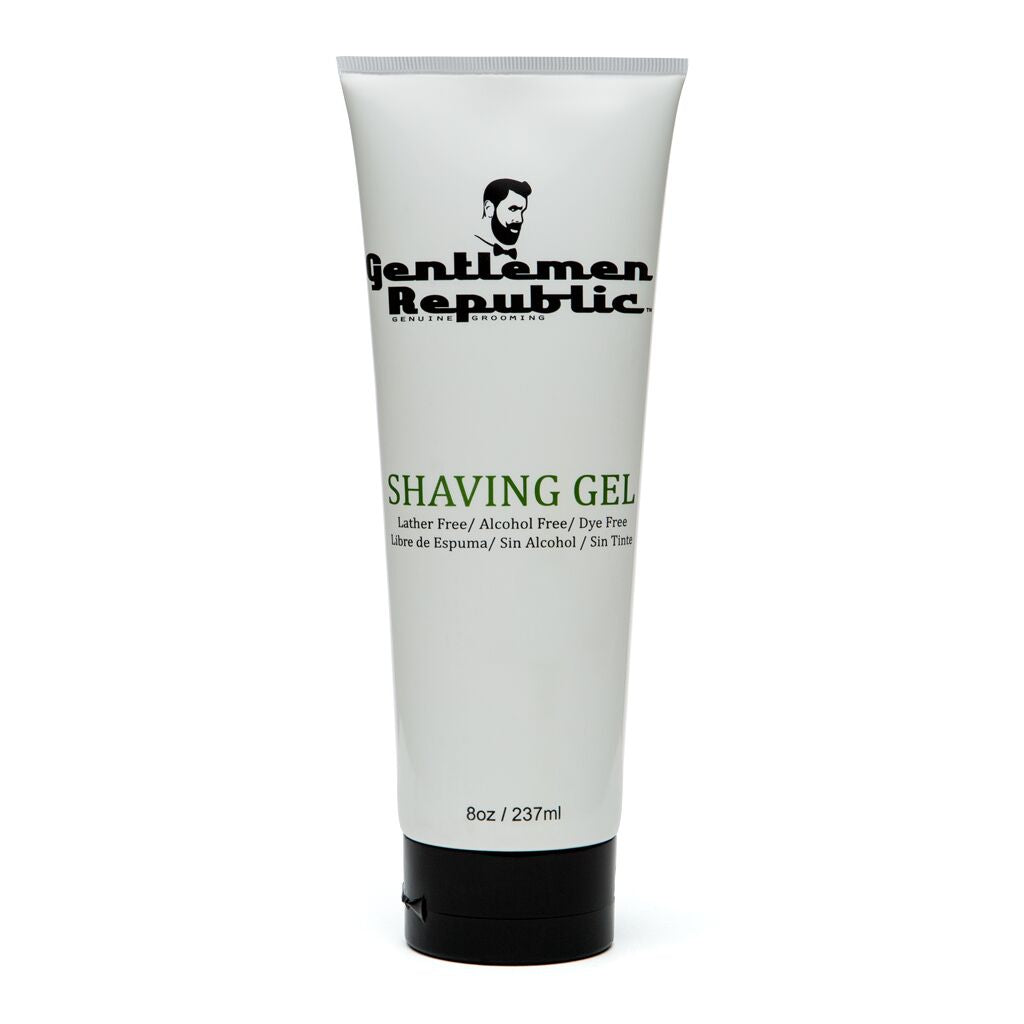
The Shave Gel is dye-free and lather-free with peppermint oil for a smooth glide.
Watch out: skipping a consistent sanitation step between clients is the fastest way to turn a good reputation into a bad review, regardless of how good the products are.
Consistency is the quiet engine of a barbershop's name. Everything else is decoration.
Stocking Professional Barber Products in Your Shop
Stocking professional barber products is a retail decision as much as a service one. The products you use on clients become the products they ask to buy, and a curated shelf turns a service into recurring revenue.
Start with what you actually reach for. If your station runs on a hard-hold gel, a medium-hold cream, and a shave gel, that's your opening retail lineup. Add tools as clients ask about the clipper or trimmer you used on their fade.
For owners building this out properly, our guide on how to start a barbershop retail line walks through the step-by-step process, from product selection to display and pricing. The shops that get retail right treat the shelf as an extension of the chair, not an afterthought.
The gap between a good cut and a great one often comes down to whether the products and tools behind it perform the same way every single time. Gentlemen Republic builds professional barber products with clean, responsible ingredients and shop-floor knowledge from working barbers and stylists, so your results stay dependable from the first client to the last.
Frequently Asked Questions
What makes a grooming product professional-grade?
Professional-grade products are formulated for repeated daily use and consistent results, not occasional styling. They typically carry higher concentrations of active ingredients, hold up through long appointment schedules, and are sold through professional channels rather than drugstore aisles. A barber-grade gel, for example, is built to deliver the same hold on client eight as it did on client one, with no flaking or separation mid-day. The label matters less than the formulation and the consistency batch to batch.
Are barber-grade hair products different from retail products?
Yes, and the difference shows up in three places: concentration, consistency, and control.
Why are some professional barber products sold only to barbers?
Professional-only access protects both the brand and the barber. It keeps pricing structured so shops can retail at a margin, and it ensures the person applying the product understands how to use it.
Do professional-grade products last longer than store-bought ones?
Per use, usually yes. A concentrated professional gel or shave gel requires a smaller amount to achieve the same hold or glide, so an 8 oz tub often outlasts a larger retail bottle. The bigger gain is in tools: a professional clipper rated for a 120-minute runtime and a trimmer with a 2-hour cordless battery handle a full day of clients without mid-fade slowdowns. Add durability of high-carbon steel blades and the cost per client drops well below the sticker price.



Share:
How to Style Short Hair with a Cowlick for Beginners