
Last Updated: November 5, 2026
Quick Summary
Professional barber tips for textured hair maintenance start with a structured five to ten minute consultation that assesses curl pattern, density, porosity, and scalp condition before any cutting begins. Cut textured hair in its dry, natural state to account for shrinkage, and give clients a written daily, weekly, and appointment-based home routine.
- Detangle damp, conditioned hair from the ends upward, never pulling through a snag.
- Point cutting removes weight and adds movement by angling shears into the ends.
- Most textured cuts hold their shape for six to eight weeks before losing definition.
- High-porosity hair needs heavier creams and occlusive oils to retain moisture.
- Carry at least one lightweight and one rich styling option in each product category.
Table of Contents
- Start With a Barber Consultation for Textured Hair
- Preparing and Detangling Textured Hair Before the Cut
- Point Cutting for Textured Hair: Shape Without Bulk
- Cutting Curls With Shrinkage in Mind
- How Often to Get a Haircut for Textured Hair
- Textured Hair Maintenance at Home Between Cuts
- Stocking the Right Products for Textured Hair Clients
- Frequently Asked Questions
Start With a Barber Consultation for Textured Hair
Great cuts for textured hair begin before the scissors come out. A structured consultation is the professional barber tip that separates a good result from a guessing game.
Skip it, and you risk cutting wet, watching the hair spring up two inches, and losing a client's trust. Most texture complaints trace back to a rushed consult, not poor scissor work.
The Assessment Checklist Every Barber Should Run
Run through these before you touch the hair:
- Curl pattern: loose wave, defined spiral, tight coil, or zigzag
- Density: thin, medium, or thick coverage per square inch
- Porosity: does water bead up or soak in fast?
Ask one direct question at the end: "How do you normally wear it?" That answer shapes the cut more than any chart.
Watch out: assessing hair only while wet hides density and shrinkage. Always check it dry first.
Preparing and Detangling Textured Hair Before the Cut
Detangling is where most sessions succeed or stall. Working through textured hair dry and fast causes breakage and turns a relaxed appointment tense. Take the extra minutes.
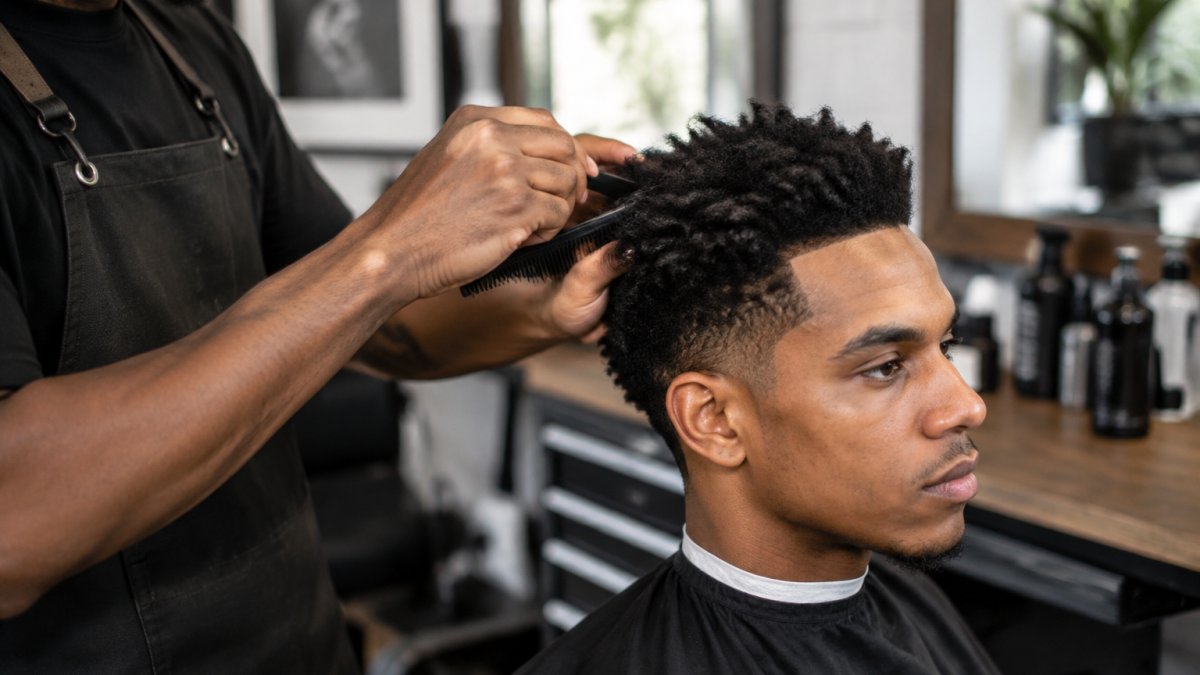
Preparation means sectioning damp, conditioned hair and removing tangles from the ends upward before any cutting begins. A wide-tooth comb and sectioning clips do most of the work.
Start with damp hair, not soaking wet. A mist spray bottle lets you control moisture section by section. Then clip the rest out of the way with a hair clip set so each section gets full attention.
Gentle Detangling From Ends to Roots
Follow this order every time:
- Split hair into four to six sections with clips
- Mist one section until damp, not dripping
- Comb the last two inches with a wide-tooth comb
- Move up gradually, untangling small sections
- Use fingers first on tight knots, then the comb
- Never pull through a snag; work it loose sideways
A common mistake is starting at the roots. That pushes tangles down and tightens them. Ends first, always.
Point Cutting for Textured Hair: Shape Without Bulk
Point cutting is the technique that gives textured hair movement without thinning it out.
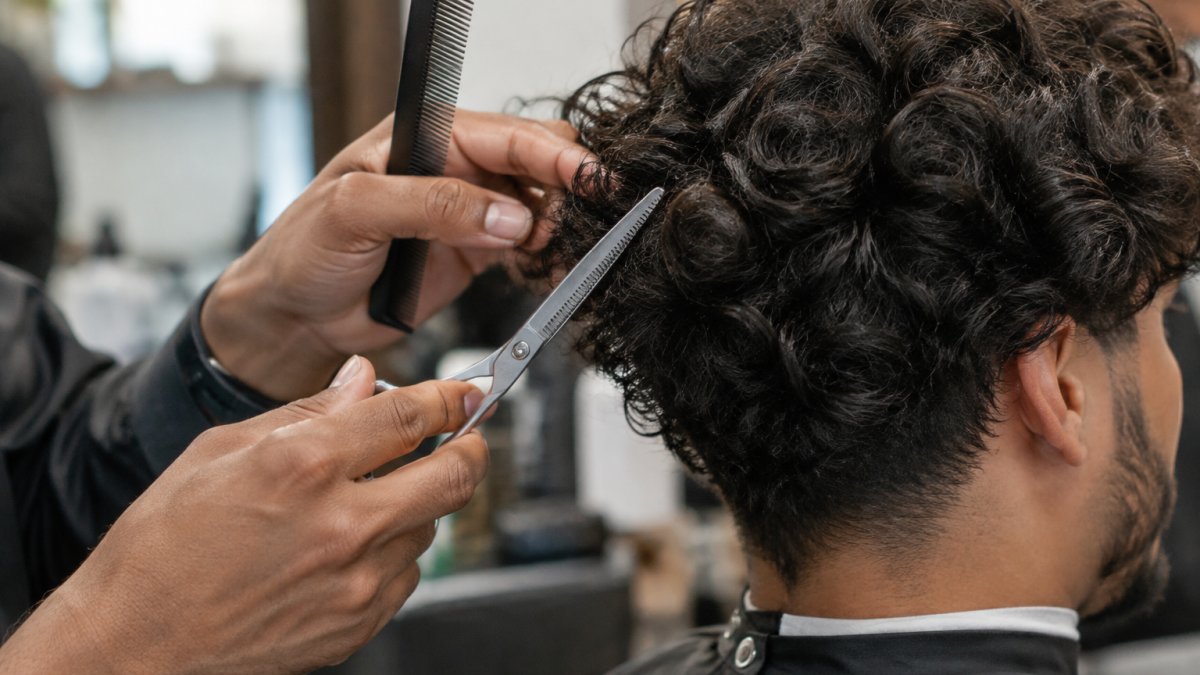
Here is how we would run it:
- Work on dry or mostly dry hair so you see the true curl
- Take small vertical sections
- Angle the shears parallel to the hair strand
Good shears matter here. Dull blades crush the ends and cause frizz. A pair of professional shears made for precision work keeps the cut clean and the curl intact.

Watch out: point cutting too high up the strand creates holes and frizz. Stay near the ends.
Cutting Curls With Shrinkage in Mind
Shrinkage is the number that surprises clients most. Tight coils can lose several inches of visible length when they dry. Cut for the dry result, not the wet one.
Shrinkage-aware cutting means measuring and shaping textured hair in its dry, natural state so the final length matches what the client expects. Cutting wet coils can end shorter than planned.
Here is how to communicate it:
- Show the client their dry length before you start
- Explain that wet hair will look longer
- Cut conservatively, then check dry
A simple rule: when in doubt, leave more. You can always take off more later. You cannot put it back.
How Often to Get a Haircut for Textured Hair
There is no single schedule, but there is a reliable starting point. Most textured cuts hold their shape well for six to eight weeks, then start to lose definition.
How often to get a haircut for textured hair depends on growth rate and style, but every six to eight weeks suits most clients. Tight coils often stretch to ten or twelve weeks. Short, sharp shapes need more frequent visits.
Use this as a guide:
| Hair Type | Typical Trim Interval | Why |
|---|---|---|
| Short textured cuts | 4-6 weeks | Shape fades fast |
| Medium curls | 6-8 weeks | Balance of shape and growth |
| Tight coils | 8-12 weeks | Slower visible change |
| Long curly hair | 8-10 weeks | Focus on ends and shape |
Share the schedule with the client. A trim plan they understand keeps them coming back.
Textured Hair Maintenance at Home Between Cuts
The cut is half the job. What happens between appointments decides whether the shape holds. This is where textured hair maintenance at home matters most.
Textured hair maintenance at home means a simple routine of gentle washing, deep conditioning, and protective styling that preserves moisture and curl pattern between visits. Keep it short enough that clients actually follow it.
Build the plan around a daily, weekly, and appointment-based schedule so the client knows exactly what to do and when.
The Daily, Weekly, and Appointment Schedule
Give every client a written plan like this:
Daily
- Refresh in the morning with a light mist of water and a small amount of leave-in or styling cream, scrunching gently to reactivate definition.
- Protect at night by gathering hair into a loose pineapple with a silk scrunchie or wearing a satin bonnet. Cotton pillowcases draw out moisture and cause frizz at the nape and edges.
- Avoid touching the hair throughout the day; hands transfer oil and disturb the curl pattern.
Weekly
- Wash once or twice a week with a gentle, sulfate-free cleanser. For tight coils, once a week is often enough; for loose waves, twice a week may suit better.
- Condition every wash, applying from mid-shaft to ends and detangling with a wide-tooth comb while the conditioner is in.
- Deep condition once a week for dry, damaged, or color-treated hair; every two weeks for healthy hair.
Every Appointment (6-12 weeks)
- Trim according to the schedule in the previous section.
- Reassess porosity and density, since these can change with season, diet, and product use.
- Review the routine and adjust product weight or cleansing frequency based on how the hair behaved since the last visit.
Troubleshooting Common Maintenance Mistakes
Even a good routine goes wrong. Here is how to correct the most common problems:
- Frizz that won't settle: usually too much manipulation on dry hair or a product that is too light for the climate. Switch to a heavier cream or add a light oil to the ends.
- Curls falling flat: often buildup from heavy products or conditioner applied too close to the roots. Clarify once a month and keep conditioner off the scalp.
- Dry, brittle ends: frequently caused by sleeping on cotton or skipping deep conditioning. Recommend a satin pillowcase and a weekly mask.
- Scalp flakes or itching: can come from product buildup or dryness. Suggest a gentle clarifying wash and, if irritation persists, advise the client to see a dermatologist.
A weekly Intensive Restructure Mask helps dry, over-processed strands feel stronger and softer. For clients unsure whether they need a mask or a regular conditioner, this guide on hair mask vs conditioner clears up the difference.

Wash, Condition, and Protect the Curl Pattern
The wash routine is where most curl definition is won or lost. Harsh cleansing strips moisture and leaves coils frizzy and undefined.
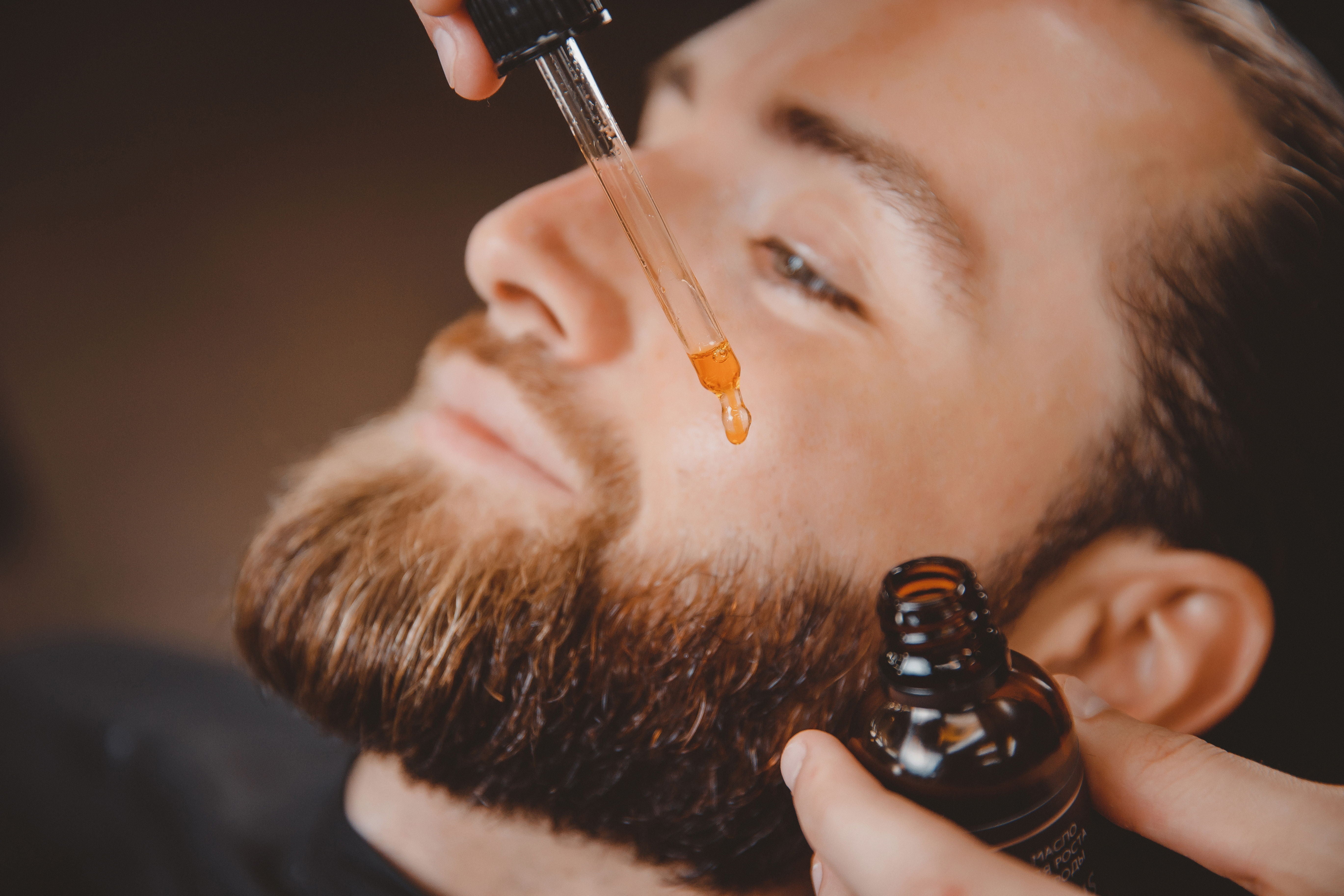
Recommend a sulfate-free wash, cool-to-warm water, and a leave-in or styling cream applied to damp hair. A light hair and beard oil can help tame frizz and add a natural shine on the ends.

Watch out: applying conditioner or heavy cream directly to the scalp on a client prone to buildup can cause flakes and itching; keep those products on the mid-shaft and ends.
Stocking the Right Products for Textured Hair Clients
Textured hair clients want moisture, definition, and gentle cleansing, not a wall of straight-hair products.
Stocking for textured hair means carrying a focused set of moisture-focused and lightweight products that match the most common curl types you serve. Fewer, better options sell faster than a crowded shelf.
But the shelf only works if you can explain why one product suits one client and not another.
Match Products to Hair Needs
Every styling and care product sits on three spectrums:
- Hold: light (soft definition, touchable) to strong (locked-in shape, less movement). Tight coils and humid climates often need more hold; loose waves and dry climates often need less.
- Weight: lightweight (water-based, absorbs fast) to heavy (butter- or oil-based, sits on the surface). Fine or low-density hair drowns in heavy products; thick, high-porosity hair often needs them.
- Moisture support: humectant-rich (draws water in) to occlusive (seals water out). Dry, porous hair benefits from layering both; oily scalps may need humectants only.
Use porosity as the first filter. High-porosity hair loses moisture quickly and usually needs heavier creams and occlusive oils. Low-porosity hair resists absorption and does better with lightweight, water-based products and occasional clarifying.
Adjust for Climate
Climate changes which product wins at the chair:
- Humid climates: humidity pulls glycerin and other humectants toward the air, which can swell the hair and create frizz. Recommend lighter, humidity-resistant styling products with stronger hold and fewer humectants on the surface.
- Dry climates: the air pulls moisture out of the hair. Lean on moisture-rich conditioners, leave-ins, and oils that seal the cuticle.
- Seasonal swings: clients in areas with wet summers and dry winters may need two product sets, one lighter for summer and one richer for winter.
Build the Shelf Around These Categories
- Gentle cleansers for weekly wash routines, including one clarifying option for buildup
- Deep conditioners and masks for moisture and repair
- Lightweight styling creams for definition on fine or low-porosity hair
- Richer creams and butters for thick, high-porosity hair
Watch out: stocking only one weight of styling product forces clients with different porosity to choose the wrong one; carry at least one lightweight and one rich option in each category.
Frequently Asked Questions
How do you maintain textured hair between professional cuts?
Textured hair maintenance at home comes down to moisture and gentle handling. Wash with a sulfate-free cleanser once or twice a week, follow with a deep conditioner, and detangle damp hair with a wide-tooth comb starting at the ends. Sleep on a silk pillowcase or use the pineapple method with a silk scrunchie to protect the curl pattern overnight. A lightweight oil like Gentlemen Republic Hair & Beard Oil ($18.00) can help tame frizz.
What is point cutting, and when should a barber use it on textured hair?
Point cutting is a technique where the barber holds the scissors vertically and snips into the ends of the hair rather than straight across. On textured hair it removes bulk and weight without creating a blunt line, so curls keep their natural shape and movement. Use it on thick or unruly hair that looks heavy at the ends, and avoid it on fine hair where you want to preserve density.
How often should you get a haircut for textured hair?
Most textured hair clients should book a trim every 6 to 8 weeks to keep the shape clean and remove split ends before they travel up the strand. Shorter styles or high-contrast fades may need a visit every 3 to 4 weeks. If the client is growing length, stretch it to 10 to 12 weeks but still schedule a light dusting so the curl pattern stays defined. Barber consultation for textured hair should confirm the schedule at every appointment.
What should you tell a barber when asking for texture?
Bring a photo and describe the finished shape you want, not just the length. Mention how you wear your hair day to day, how much time you spend styling, and whether you use heat. Tell the barber if your hair shrinks a lot when dry, since that changes how much to take off. A good barber consultation for textured hair includes feeling the hair dry and damp before any cutting starts.
Textured hair rewards preparation, patience, and the right tools more than any single technique. If your shelf needs products that match that standard, Gentlemen Republic offers professional-grade masks, oils, and combs built with real barber input. Explore our grooming line and give every textured-hair client a routine that holds its shape. Get started with Gentlemen Republic and stock products your clients will ask for by name.


Share:
Is Expensive Hair Pomade Worth It? An Honest Breakdown