
You finished styling, glanced at the sink, and saw a few stray hairs. Now you’re wondering - is your pomade to blame? It’s a question every guy with a styling routine asks at some point. The good news: pomade is not a direct cause of permanent hair loss. The truth is more nuanced. Heavy product, poor scalp habits, and the wrong combinations can stress your hair follicles - but the pomade itself isn’t tearing strands from your head. At Gentlemen Republic, we believe in honest grooming education. This guide breaks down what pomade actually does to your scalp, what really causes hair loss, and how to keep styling without second-guessing every wash.
The Short Answer - Does Pomade Cause Hair Loss?
No. No major medical authority - FDA, NHS, or NICE - classifies pomade as a proven cause of hair loss. There’s no clinical evidence that pomade ingredients destroy hair follicles or trigger pattern baldness.
What pomade can do is contribute indirectly to scalp problems if misused. The damage isn’t the product - it’s buildup, irritation, and mechanical stress.
Pomade is a tool, not a villain. How you use it matters far more than whether you use it.
How Pomade Affects Your Scalp & Hair Follicles
Heavy oil-based pomades create an occlusive layer on your scalp. Over time, mixed with sweat and sebum, this leads to:
• Follicular occlusion - clogged follicle openings
• Folliculitis - inflamed or infected follicles
• Acne cosmetica (pomade acne) - small breakouts along the hairline
• Disrupted sebum balance and scalp microbiome
This is inflammation, not destruction. Pomade doesn’t attack follicles the way autoimmune conditions do. Your scalp is skin - treat it like the rest of your face with proper skin care.
Traction Alopecia - The Real Pomade-Related Risk
The one clinically recognized hair loss risk tied to pomade is traction alopecia - hair loss from sustained mechanical tension on the hair shaft.
Tight slick-backs, waves, braids, and pompadours combined with heavy product create constant pull on your hairline. Over time, this tension damages follicles around the frontal and temporal hairline.
Men with Afro-textured hair face higher risk due to styling practices that combine product weight with tension. The solution: ease the pull and switch to lighter formulas. Clean hairline edges with proper beard care also reduce the overall styling load.
Ingredients to Watch in Your Pomade
Not all pomades are formulated the same. Scan the label.
Limit or avoid:
• Petroleum, petrolatum, mineral oil - heavy occlusives
• Lanolin - common allergen
• Parabens and phthalates - endocrine disruptors
• Alcohol and polyethylene glycol - drying agents
• Synthetic fragrances, isothiazolinones, and formaldehyde-releasing agents- common irritants
Better options:
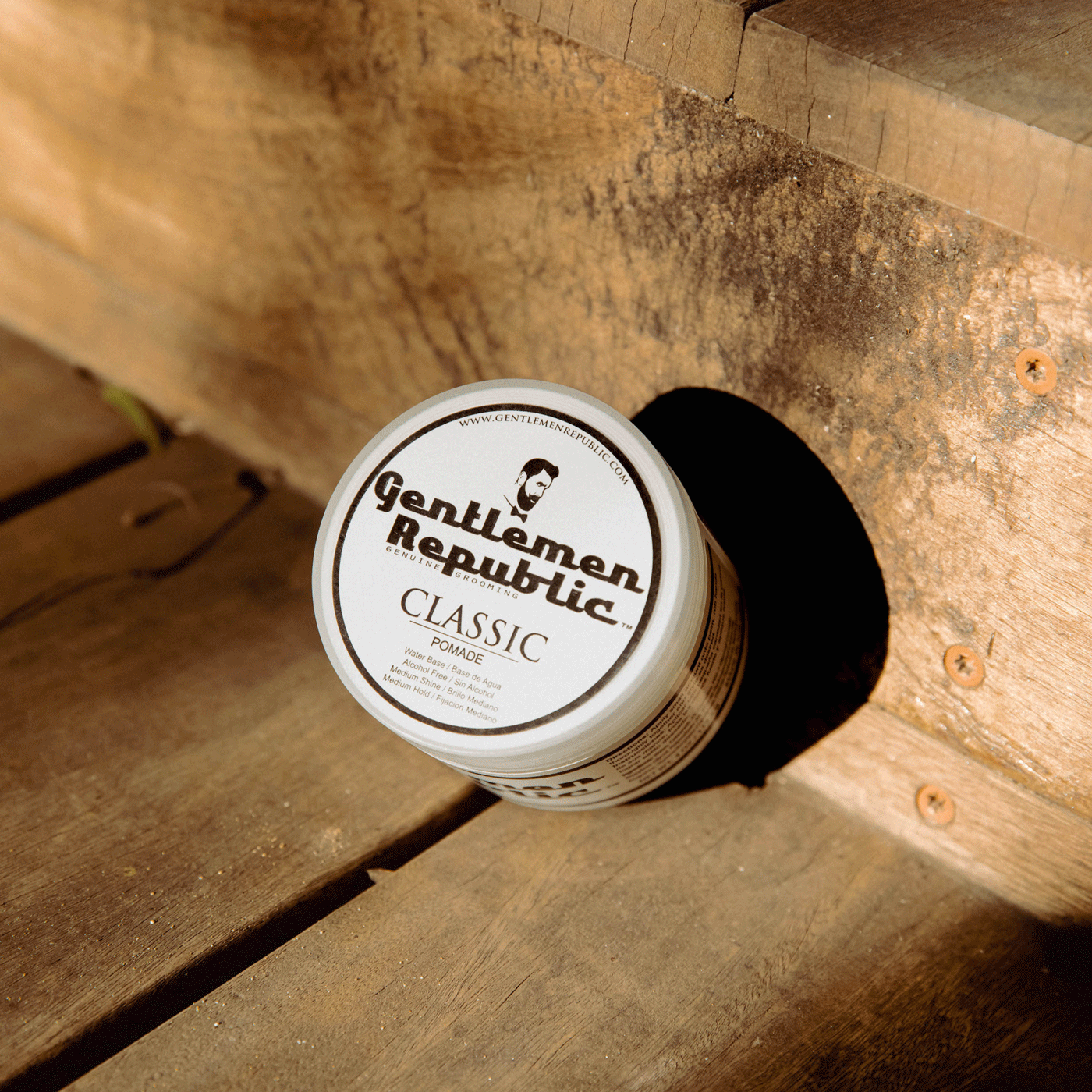
• Water-based formulas like our Classic Pomade — medium hold, medium shine, washes out cleanly
• Plant-based oils: coconut, castor, jojoba, shea butter
• Natural beeswax
• Fragrance-free, paraben-free formulations
• A lighter hair gel on flexible-hold days
What Actually Causes Hair Loss
If pomade isn’t the cause, what is?
• Androgenetic alopecia - most common; driven by genetics and DHT (dihydrotestosterone)
• Telogen effluvium - temporary stress shedding
• Alopecia areata - autoimmune patchy loss
• Hormonal changes - thyroid, puberty, andropause
• Nutritional deficiencies - iron, zinc, biotin
Medical treatments like Minoxidil and Finasteride are FDA-approved options that require professional consultation. None of these conditions are caused - or fixed - by your styling product.
Hair Breakage vs Hair Shedding - Know the Difference
What you’re seeing tells a story:
• Breakage = short, snapped hairs without a root bulb. Caused by buildup, dryness, or mechanical stress
• Shedding = hairs from the root with a small white bulb. Indicates a growth-cycle issue - usually hormonal, genetic, or stress-driven
Losing 50–100 hairs a day is normal. Anything visibly more - especially patterned - deserves attention. Examine the ends of stray hairs for your first diagnostic clue.
Signs Your Pomade Routine Is Affecting Your Scalp
Watch for these red flags:
• Greasy or heavy scalp even after washing
• Itching, flaking, or redness where product is applied
• Tender bumps or pustules along the hairline
• Hairline recession at the temples
• Breakage at points of styling tension
• Dull, brittle hair
• Residue that won’t rinse cleanly
If three or more apply, dial back the product and reset with our Intensive Restructure Shampoo.
How to Use Pomade Safely
Smart use beats fear-driven avoidance:
• Use pea-sized amounts - most guys use way too much
• Apply to mid-lengths and ends, not the scalp
• Rinse thoroughly with warm water every wash
• Patch test new products for 48 hours before full use
• Don’t sleep with pomade in - let your scalp breathe overnight
• Take rest days - one or two product-free days a week
• Avoid heavy formulas with tight hairstyles
• Choose water-based formulas when possible
Pair smart products with the right tools from our hair essentials collection.
When to See a Doctor
DIY only goes so far. See a dermatologist or trichologist if you notice:
• Widespread or persistent shedding
• Patchy bald areas
• Scalp pain, scarring, or persistent pustules
• Smooth, shiny scalp patches (a sign of scarring alopecia)
• Symptoms that worsen no matter what you change
Early diagnosis often means better outcomes - especially for scarring conditions and tinea capitis.
Frequently Asked Questions
Does pomade cause permanent hair loss?
No. Pomade does not destroy follicles. The only related permanent risk is scarring from untreated folliculitis or long-term traction alopecia.
Is oil-based pomade worse than water-based for hair health?
Yes - oil-based formulas are heavier, harder to wash out, and more likely to cause buildup. Water-based pomades are gentler on the scalp.
Can buildup actually cause hair loss?
Indirectly. Buildup clogs follicles and creates inflammation, which can lead to temporary shedding. Once you clarify, the cycle usually corrects itself.
Can I use pomade with a sensitive scalp?
Yes - choose fragrance-free, water-based formulas, apply away from the scalp, and patch test first.
What are healthier pomade alternatives?
Lighter water-based formulas with clean ingredient lists. Quality over volume, every time.

Share:
Hair Styling Products for Men: Pomade vs Clay vs Paste vs Gel
How to Remove Hair Product Buildup: The Modern Gentleman's Guide