
Table of Contents
- Why Sensitive Skin Needs a Different Grooming Approach
- Ingredients to Avoid for Sensitive Skin
- Fragrance-Free Grooming Products: What the Label Really Means
- Patch Testing Skincare Products Before You Commit
- Sensitive Skin Beard Care Without the Burn
- A Simple Daily Routine with Clean Ingredient Grooming Products
- When Irritation Needs Professional Assessment
- Frequently Asked Questions
Last Updated: October 19, 2026
Why Sensitive Skin Needs a Different Grooming Approach
Sensitive skin is a skin type that reacts more easily to products, weather, and friction with redness, stinging, itching, or dryness.
That is why clean ingredient grooming products for sensitive skin matter more than marketing claims. A product can call itself natural and still irritate.
Men shave, which adds another layer of stress: a blade scrapes the top of the skin every time. A grooming routine for sensitive skin has to account for that friction, not just the cleanser.
Ingredients to Avoid for Sensitive Skin
Certain ingredients are the usual suspects behind reactions. Watch for these in any product you buy:
- Added fragrance and parfum: the leading cause of cosmetic contact reactions in many dermatology practices
- Drying alcohols: ethanol and denatured alcohol in high concentrations can leave skin tight and flaky
- Harsh sulfates: SLS and SLES strip oils aggressively and leave the barrier weaker
- Essential oils and botanical extracts: natural does not mean gentle; peppermint, citrus, and eucalyptus can sting
- Preservatives like methylisothiazolinone: linked to allergic reactions in leave-on products
Common Irritants and Allergens in Grooming Products
Allergens hide in products you would not expect: shave gels, beard oils, even "gentle" body washes. A fragrance-free label is the single most useful filter you can apply. If a product lists parfum, fragrance, or a long list of plant oils, patch test before you commit.
How to Read an Ingredient List
Ingredient lists are ordered by concentration, so the first five ingredients tell you what the product mostly is. Scan the top five for fragrance, alcohol, and sulfates. If they appear early, the product is likely to irritate reactive skin. A short, simple list is usually a safer bet than a long one packed with botanicals.
Fragrance-Free Grooming Products: What the Label Really Means
Fragrance-free means no fragrance has been added to the formula. It does not guarantee the product is scent-free, because raw ingredients can carry their own smell. Unscented, by contrast, often means a masking fragrance was added to cover the natural odor of the ingredients. For sensitive skin, fragrance-free is the safer label.
This distinction matters because fragrance is one of the most common causes of contact dermatitis. A product can be marketed as gentle and still contain parfum. Read the back of the label, not the front.
Clean, Natural, and Hypoallergenic Are Not Interchangeable
These three words get used as if they mean the same thing. They do not, and treating them as synonyms is how reactive skin ends up reacting.
- Clean has no single legal definition for cosmetics and personal-care products. It is a marketing term, and brands define it differently. A "clean" formula can still contain an essential oil or botanical extract that stings sensitive skin.
- Natural refers to ingredient origin, not safety. Poison ivy is natural. Peppermint oil is natural and can burn. Origin tells you nothing about how a compromised barrier will respond.
- Hypoallergenic means the manufacturer claims the product is less likely to cause allergic reactions. It is not a guarantee, and it is not a standardized test result you can compare across brands.
A common pattern is that products labeled clean or natural lean heavily on botanical extracts and essential oils for scent and marketing story. For sensitive skin, that is often the opposite of helpful. Judge the formula by what is in it and where it sits in the ingredient list, not by the word on the front.
How to Evaluate a Fragrance-Free Claim
Use the ingredient list as your filter, in this order:
- Scan for fragrance terms. Look for parfum, fragrance, aroma, and essential oil blends. If any appear, the product is not truly fragrance-free for your purposes, even if the front label says otherwise.
- Check the top five ingredients. Lists are ordered by concentration, so the first five tell you what the product mostly is. Fragrance, drying alcohol, or harsh sulfates near the top are a warning.
- Look for masking agents. In an "unscented" product, added fragrance may be doing the masking. The ingredient list is the only place that shows up.
- Prefer short lists. A short, simple formula gives reactive skin fewer potential triggers than a long list of botanicals and extracts.
- Patch test anyway. Even a fragrance-free product can contain a preservative or surfactant your skin dislikes. The label narrows the field; your skin makes the final call.
The Trade-Off Nobody Mentions
Going fragrance-free usually means giving up scent, and some formulas compensate with ingredients that feel less pleasant or absorb more slowly. That is a fair trade for reactive skin. A product that smells great but leaves your face stinging is not a better product; it is a trigger with good packaging. Choose the boring formula that keeps the barrier intact.
Patch Testing Skincare Products Before You Commit
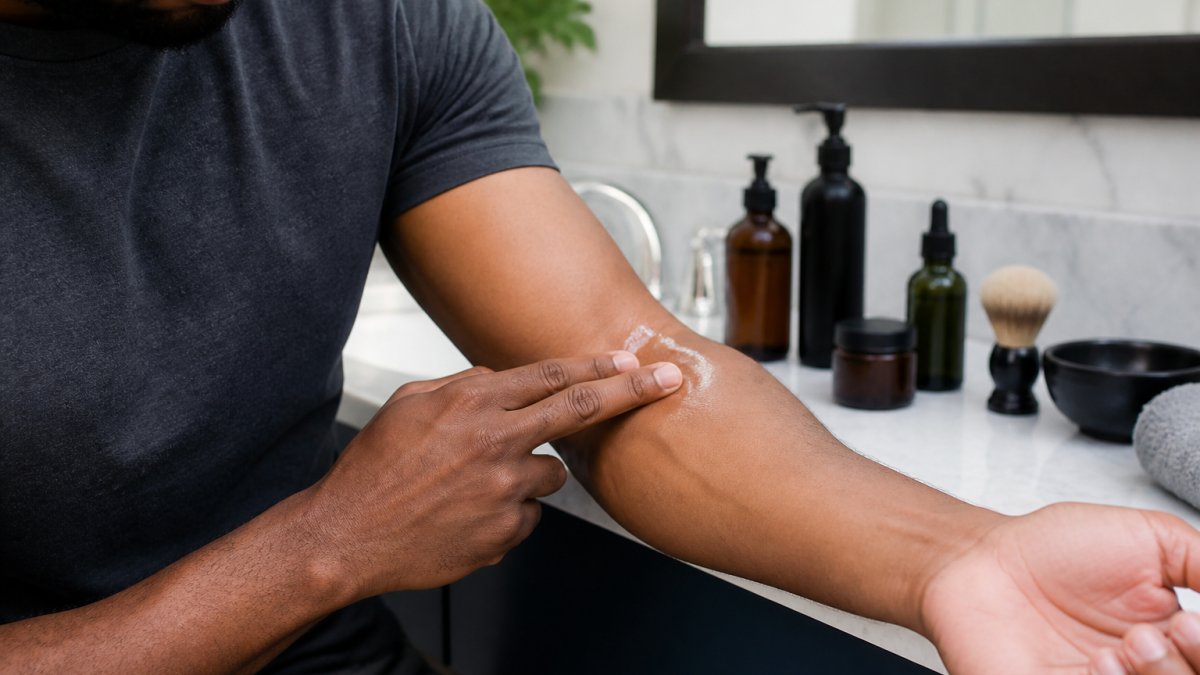
Patch testing is the practice of applying a small amount of a new product to a controlled area of skin and watching for a reaction before using it broadly. It is the cheapest insurance in grooming.
Here is how we would do it:
- Apply a small amount to the inside of your forearm or behind your ear.
- Leave it uncovered for 24 hours without washing the area.
- Check for redness, itching, or swelling.
- If clear, repeat on a small patch of your face for another 24 hours.
- Introduce only one new product at a time so you can identify the culprit if a reaction appears.
Sensitive Skin Beard Care Without the Burn
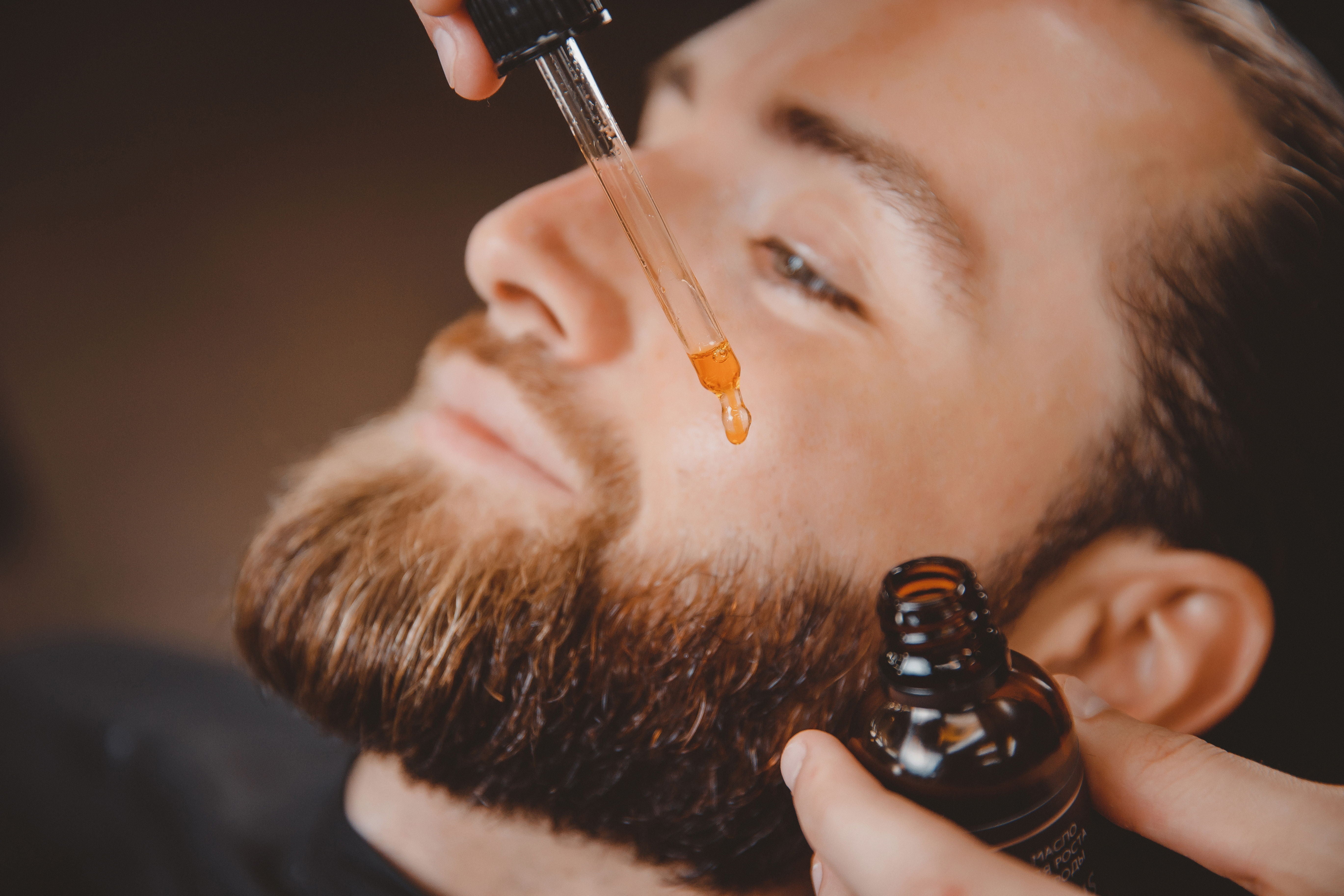
Beard care is where sensitive skin gets tested hardest. The skin under a beard is often drier and more prone to flaking, and beard oils with heavy fragrance can trigger itch. A lightweight, fragrance-free beard oil that absorbs quickly is the better choice for reactive skin.
Shaving irritation is the other half of the problem. A dull blade, too much pressure, or a shave gel loaded with fragrance will leave redness and razor burn. Use a fresh blade, shave with the grain, and follow with a soothing after-shave rather than an alcohol-heavy splash.
Why Shaving Irritates Sensitive Skin
A blade does two things at once: it scrapes the top layer of skin and it removes hair, which is a form of physical exfoliation. On a compromised barrier, that friction is enough to cause redness, stinging, and razor burn even when the product is gentle. Add a dull blade dragging instead of cutting, too much pressure, or a shave gel with drying alcohol, and the irritation compounds.
The fix is mechanical as much as it is about ingredients:
- Use a fresh blade. A dull blade tugs at hair and skin instead of slicing cleanly. Replace it on a regular schedule rather than waiting for it to feel rough.
- Shave with the grain first. Going against the grain gives a closer shave but lifts and irritates skin. For reactive skin, with-the-grain is the safer default.
- Skip the pressure. Let the blade do the work. Pressing harder does not shave closer; it removes more skin.
- Use a lubricating shave gel or cream. The product's job is to let the blade glide. Low-fragrance, no drying alcohol.
- Rinse with cool water and pat dry. Hot water and rubbing both add stress to skin that is already irritated.
Beard Care for Reactive Skin
The skin under a beard needs moisture and barrier support, not heavy fragrance. A lightweight, fragrance-free beard oil that absorbs quickly conditions the hair and the skin beneath it without leaving a greasy film or a scent that lingers.

A practical order of operations:
- Cleanse gently. Use a fragrance-free, sulfate-free cleanser on the face and through the beard. Harsh body wash strips the skin under the beard and makes flaking worse.
- Pat dry, do not rub. Friction on damp skin is a common trigger.
- Apply a few drops of lightweight beard oil. Warm it between your palms and work it through the beard to the skin, not just the hair.
- Moisturize the exposed skin. The cheeks and neck around the beard need barrier support too.
- Shave after, not before, if you shave the neckline. Shaving freshly moisturized skin is easier on the barrier than shaving dry, irritated skin.
Post-Grooming Care
After shaving or trimming, the skin is at its most reactive. An alcohol-heavy splash will sting and dry the barrier further. A soothing after-shave that hydrates and calms is the better choice. Apply it to the shaved area, let it absorb, and then moisturize. If the skin feels tight or stings for more than a few minutes, the product or the blade is the problem, not your technique.
For sensitive skin, the beard routine that works is boring: gentle cleanser, lightweight fragrance-free oil, fresh blade, soothing after-shave. Skip the scented splashes.
A Simple Daily Routine with Clean Ingredient Grooming Products
A sensitive-skin routine does not need ten steps. It needs the right four, done consistently.
| Step | Product Type | What to Look For | Frequency |
|---|---|---|---|
| Cleanse | Gentle facial cleanser or cleansing bar | Fragrance-free, sulfate-free, mild surfactants | Morning and night |
| Shave | Shave gel or cream | Lubricating, low-fragrance, no drying alcohol | As needed |
| Soothe | After-shave | Hydrating, calming, alcohol-light | After each shave |
| Moisturize and condition | Lightweight beard oil or moisturizer | Fragrance-free, non-greasy, barrier-supporting | Daily |
Our Cleansing Face Bar is a good starting point: it is fragrance-free, SLS-free, and SLES-free, and built with hemp seed oil, aloe, and coconut oil to cleanse without stripping. Pair it with our After Shave for post-shave calming, and our Hair & Beard Oil for lightweight conditioning without added fragrance.

When Irritation Needs Professional Assessment
Most mild irritation settles within a few days of removing the trigger. See a dermatologist if redness spreads, if the skin cracks or weeps, if itching disrupts sleep, or if a reaction appears after trying a new product and does not improve within a week.
Do not layer multiple new "soothing" products onto inflamed skin. Each new product is another potential trigger, and stacking them makes it harder to identify what caused the reaction.
Sensitive skin does not have to mean a stripped-down routine with nothing that works. Start with our Cleansing Face Bar, add the After Shave and Hair & Beard Oil, and give your skin four simple steps it can trust.

Frequently Asked Questions
What ingredients should people with sensitive skin avoid in grooming products?
Look for and avoid common irritants such as sulfates (SLS and SLES), alcohol (especially denatured alcohol high in the ingredient list), synthetic fragrances, dyes, and preservatives like parabens. Also watch for essential oils and exfoliating acids if your skin reacts easily. Reading the full ingredient list, not just the front label, is the most reliable way to spot these. Choosing sensitive skin grooming products with short, clear ingredient lists reduces your exposure to potential allergens.
How can I tell if a grooming product is suitable for sensitive skin?
Check for a short ingredient list, and explicit labels like fragrance-free, alcohol-free, or sulfate-free. Patch test before regular use: apply a small amount to your inner forearm and wait 24 to 48 hours. If you see redness, itching, or swelling, stop using it. Products that clearly state they are formulated for sensitive skin and list soothing ingredients like aloe vera or chamomile are usually a safer starting point.
Are fragrance-free grooming products better for sensitive skin?
Yes, fragrance is one of the most common causes of contact dermatitis in personal care products. Fragrance-free grooming products avoid added perfumes and are less likely to trigger reactions. Note that unscented can still contain masking fragrances, so look for fragrance-free on the label. Even natural scents from essential oils can irritate sensitive skin, so patch testing remains important even with fragrance-free formulas.
How do I patch-test a new grooming product?
Apply a small amount of the product to a clean area of skin, such as the inner forearm or behind the ear. Leave it uncovered and avoid washing the area for 24 to 48 hours. Check for redness, itching, burning, or swelling. If no reaction appears, repeat the test on a small area of your face or beard before full use. Stop immediately if any irritation develops, and consult a dermatologist if symptoms persist.


Share:
Matte Paste vs Pomade for Men: Which to Use in 2026
Purple Shampoo Mistakes (and How to Fix Them)